Machine Music's Albums of the Decade: An Interview with Mitochondrion
This is the 56th installment of the Albums of the Decade series of interviews. For the rest of the series go HERE.]
Artist: Mitochondrion
Album: Parasignosis
Year: 2011
Label: Profound Lore Records
Favorite Song: "Tetravirulence (Pestilentiam Intus Vocamus, Voluntatem Absolvimus Part III)"
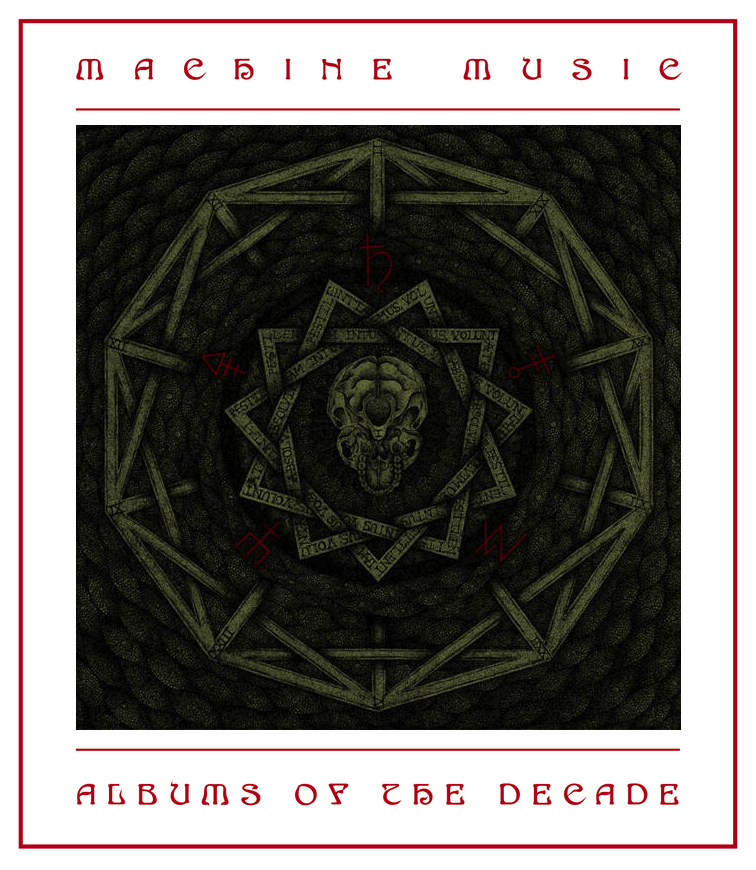
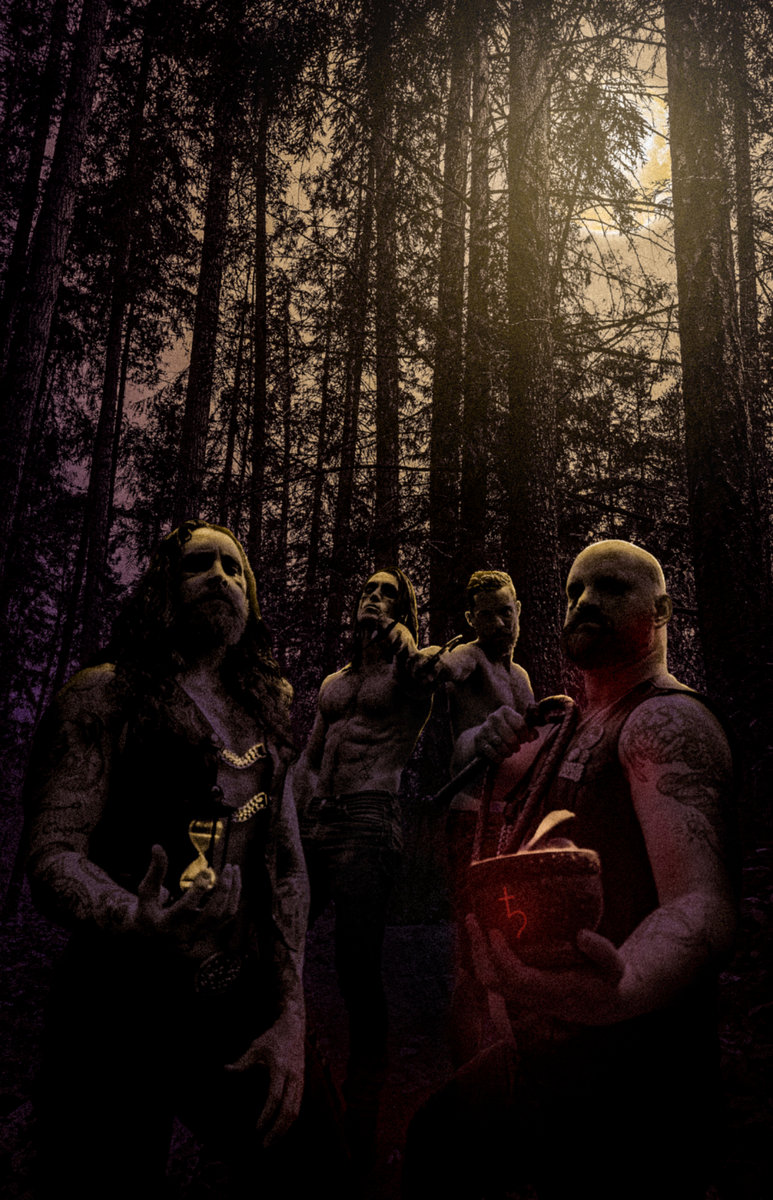
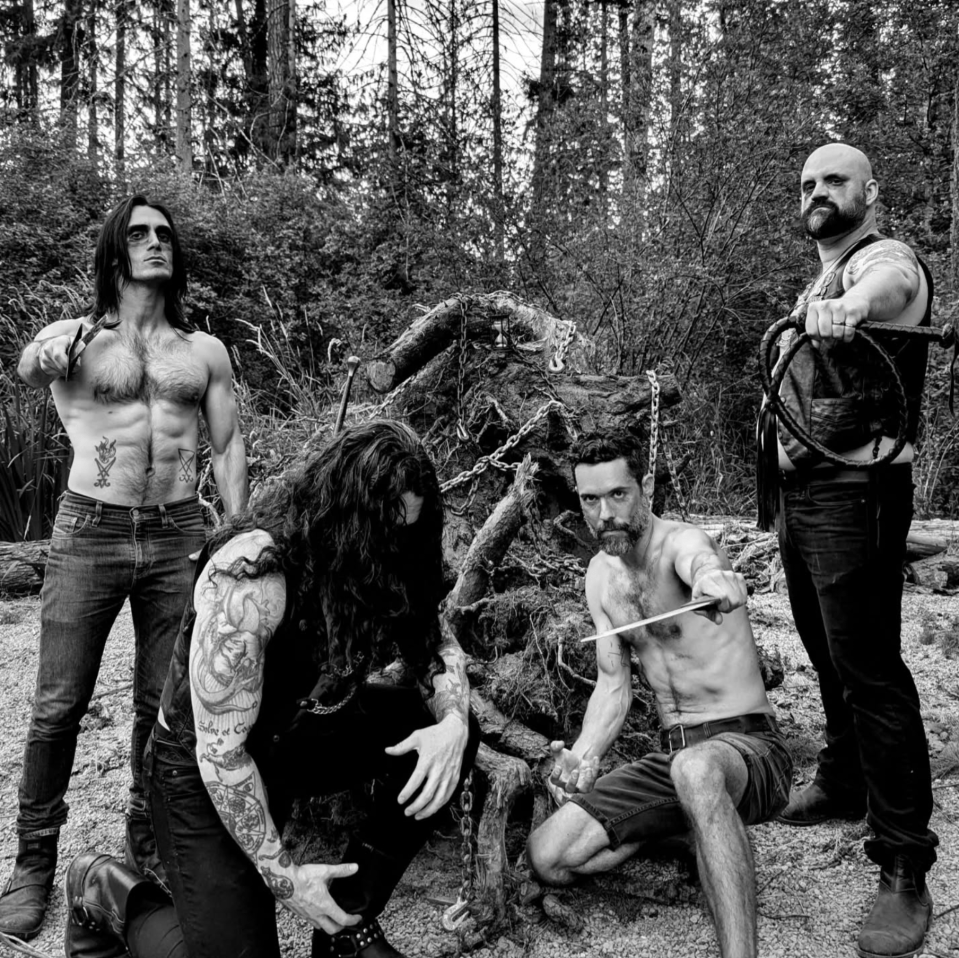
The Bare Bones: Parasignosis is the second full-length album from Vancouver-based death metal band Mitochondrion, recorded with Shawn Haché (vocals and guitars), Nick Yanchuk (vocals, guitars, bass), and Karl Godard (drums).
The Bleeding Heart: Waxing poetic here, but where Mitochondrion's debut Archaeaeon felt like a roughly hewn spear passing through your body and splintering into your abdomen, Parasignosis felt like a whole new world. A world of pain, no doubt, and dread, and violence, but a complete, refined statement. "Refined" might not come to mind considering the absolute onslaught of harsh sounds Mitochondrion unleash on their masterful album, but refined it is – all of its brutal parts coming together, dynamically, gradually, to form one massive whole. Ever since it came out Parasignosis came to embody for me what the highest level of intelligent musical mayhem, on par with bands like Portal and later Abyssal, Infernal Coil, and others.
Since 2011 the band had not been that "around," playing shows, not doing a ton of interviews. But with news that their most recent and brilliant album about to come out – Vitriseptome – I jumped on the opportunity to talk with the band about their previous full length, and one of the most brutal, dark and massive albums of the 2010s.
So, here is the product of that attempt, a sprawling conversation – conducted a few months before the release of Vitriseptome – with Shawn, Karl, and Nick about that album but also about the process of making art and everyone that goes into it. I hope you enjoy it, I fucking loved it. There's nothing like listening to artists not only relive how their art was and is made, but also rethink some of their experiences through the medium of the interview itself. It's a rare thing, but appreciated every time. And the result, if I may, is one of the best moments in a now gargantuan interview series.
As always, you check out my various interview projects and other cool shit. And if you'd like to keep abreast of the latest, most pressing developments follow us wherever I may roam (FALSE!) (Twitter, Facebook, Instagram, Spotify and now also a tape-per-day series on TIK TOK!), and listen to my, I guess, active (?) podcast (YouTube, Spotify, Apple), and to check out our amazing compilation albums. You can support my unholy work here (Patreon), if you feel like it. Early access to our bigger projects, weekly exclusive recommendations and playlists, and that wonderful feeling that you're encouraging a life-consuming habit. On to Shawn, Karl, and Nick.
Is there a moment you had with an album or a song or a live performance that really…. There are a lot of words I use for this, I keep changing them but the the core is shock, this idea of “What the fuck is this? That's not how music is supposed to work,” but in a good way. And obviously that happens often if you are an adult interested in creativity, but I guess, an early moment of that.
Shawn: I can remember being 13, I guess I was in grade eight, and someone had lent me a Cannibal Corpse CD. I think it was Gallery of Suicide, that must have just come out. I remember hiding it in my jacket because I felt like I had the most evil, grotesque thing known to man, and I slipped it into my little Discman, and I remember walking down the street just in utter disbelief to what was coming out of the headphones, and looking around and just being like: “If anyone knew what I was listening to, I would probably be killed or arrested.” Or even just looking at the imagery and just being absolutely dumbfounded that this is possible. I don't know if you're familiar with the album, but there's like, a woman slitting her guts there's the guy who shot himself.
Karl: That was definitely on my rotation too, but I think for me it was Bloodthirst the album after that one. That was the cover that made me go: “What is this shit!?” [laughs].
Shawn: Definitely. I think that was one of my earliest brushes with proper extreme metal.
So, the attraction there, I take it, is a combination of the feeling that you're carrying contraband and the fact that the music was kind of crazy? Which was it more?
Shawn: Yeah, it's almost like having this secret, like being in on this secret that you didn't know existed, and if this exists, then there's so much more of this that I am unaware of. Because, you know, at the time the heaviest things I knew were on MTV or the radio or something. And of course, this is the late 90s, so there's no metal being played on MTV. I mean there's nu metal or maybe a Metallica video here and there, but that's it. And so I think the shock and awe and the kind of mystery of it were the alluring factors for me.
Nick: I have to say, I really think that when Nick Gibas, one of the founding members of the band, the original bass player, I think the first time he showed me Morbid Angel’s Altars of Madness. When “Immortal Rites” came on, I was just: “Oh shit, this is not just like anything else I've heard.” It's as simple as that. I mean it's probably a pretty common answer to such a question, Morbid Angel, right?
Not that common. I've gotten Phil Collins before, so, you know.
Nick: I just remember hearing that and being like: “Oh, I absolutely have to do this. This is what I have to do now. I have no choice anymore.” [Laughs]
What do you mean by “do”? Listening to it or making music?
Nick: Oh, play. Yeah. Because, I mean, I was playing guitar and pissing around with other people in high school, with these guys in a band and stuff like that, and we were going to play…. Actually, I don't know the timeline of when Gibas first showed me Morbid Angel, to be honest, but that's what I'll put down for my answer.
All right, that's a good answer.
Karl: Out of high school, I started playing guitar. But. before that I was into piano, growing up, just classical. And that became less cool as I got olde. So I picked up the guitar and learned all the Metallica I could, back when before I met anybody that knew anything about death metal or anything like that. And then I ended up moving over to the island [Vancouver Island, MM] and met some degenerates who liked Cannibal Corpse and Morbid Angel, and Deicide and those bands. And it was just like downhill from there for me [laughs].
Do you remember which one of those was the first?
Karl: I don't know what it was…. I've always been like a huge skeptic of religion and all that shit, and I think with Deicide. I saw that it was like: “Well, this is speaking my language.”
[All laugh]
Karl: And just the drumming. I actually played guitar before I played drums, but I I had a kit at my parents place that my uncle gifted us like while I was playing guitar. So, I just kind of naturally picked it up and got a double-kick pedal. So that Bloodthirst album and Gallery of Suicide as well were some of the first shit that I tried to drum along to. I think for me it was just mostly just technical, less about the image, and more about the technicality of the music that kind of attracted me to it. Just because I came from that sort of musical classical background.
So, you shifted to a cooler instrument, but you maintained the nerd attitude towards the instrument. Was that it?
Karl: Yeah, pretty much, I guess. I guess that's a good way to say it. But then, obviously, the more you listen to that stuff, the more it rubs off on you [laughs], as an overall way of life and the people that you hang out with, and you know the stuff that you think is metal, right?
So I have a follow up for that. And I was debating whether or not I wanted to do it one by one, but I can ask you again now. So given that each of you described a point of attraction or a point of kind of being sucked into that world for different reasons – I think for Shawn it was more feeling like you're doing something wrong and how gross and kind of extreme and surprising it was, and for Nick, the novelty of it, that you’ve never heard something like it before…..
Nick: Well, it just sounded so powerful to me, more so than any other thing. I'm trying to think of the timeline when that happened and what my reference points were at that point. I'm pretty sure I had been listening to some Cannibal corpse at that point in time, but I don't think it hit me the same way that it did when I finally, when I first heard Morbid Angel. Just the power hidden between everything, you know what I mean? That wasn't just what you're hearing, that there was more to it.
I guess what I wanted to know is, did you ever feel like that was something you tried to kind of recreate or that you were interested in…. Obviously different people have a different attitude towards this. Sometimes people say: “Oh shit that was sick. I want to do sick shit,” and that's basically how deep it goes. And sometimes people try…. For instance, I’m an over-thinker for instance. Or please meet you if this is an overthinking anonymous session, OK.
Nick: Oh, yes. Again, you’re in good company.
Right, that means I never not overthink, right? So if I enjoy something, I always invariably ask myself, why am I enjoying this? I can't just enjoy it. I always try to kind of find something new. And obviously there's never an answer to that question, right? It's kind of an ongoing process. But still, given the variety of reactions to that 13-year old kid, 14-year old kid being kind of fucked by something, do you ever felt like the music you wrote was trying to get to that? In some way shape or form. Through the imagery, through the themes, through the, I don't know, riff choice, whatever. Was there ever like a kind of a tacit undercurrent goal?
Nick: I'm just gonna cut you off and say I 100% do feel like that. I mean, I guess it waxes and wanes as far as how present that is in my mind during writing or or rehearsing or just jamming and stuff like that. But there's times where I think I'm close. It's like I can feel it. There were a couple of times, I know, in our career together, guys, where I felt that current, that hidden current. One was the first time we were first writing “…into the Pit of Babel.” The other one was when we were first writing “Tetravirulence,” and it was going well. And then, I guess, “Tetravirulence” once again, when I came up with the lyrics for that one part. And then…. I mean those are the three main ones that I can remember, and so it has happened, where you tap into something far more powerful than the sum of the parts of what you're doing at that time.
Shawn: The funny thing is that Parasignosis ultimately kind of came about as an exercise of: “Let's try to write more of a Morbid Angel album.”
[Laughs]
Nick: That’s actually funny.
Shawn: And then it spiraled off into utter mayhem. The original goal behind writing the main riff of that title song was: “Let's write a basic Morbid Angel, meat-and-potatoes death metal song.” Let's see how it turns out. So yeah, I think also literally that happened and it never went that way.
Karl: It never goes that way.
Nick: Yeah, it never went that way.
Shawn: Yeah, it never went that way.
[Laughs]
Karl: If we shoot for a three-minute song, it's a 6 minute song. If you shoot for a six-minute, it’s a 17-minute song [laughs], kind of thing.
Shawn: Exactly. Even now we're contemplating doing a short follow up to this next after this next massive thing [Vitriseptome, MM] and of course it’s not gonna just end up being the small scope that we're hoping for. But, let's try at least [laughs].
So you're saying with Parasignosis, your thinking, at least in part, of recording that album was: “Let’s get down to basics, let's get down to the that to that warm fuzzy feeling we all love when we were scared shitless by riffs when we we were 13” that kind of an idea?
Shawn: That was the original goal, I guess: “Let's just hit a straightforward Morbid Angel style.”
Love it. I feel so good about myself now.
Nick: I guess just as far as interviews are concerned and sharing facts about the album, the topical album, and to Shawn’s comment about a three-minute song turning into a six- minute song, and the small album turning into a big album – Parasignosis was originally going be like a smaller EP. That didn't happen, it turned into a full album.But I think that the reason was it’s shorter than our other full lengths, and especially the one that's just gonna come out, is because it wasn’t originally supposed to be a full album.
So, what happened?
Nick: It's all different. It's all situational, too.
Karl: I remember with Parasignosis, the initial recording we threw out. I think I was traveling and I got back from Argentina, and these guys were working on these songs and I was living with my parents, and they tried to record drums there, and it just didn’t come together right for some reason. And then we kind of just chucked, and we revisited all the songs, things got shuffled around and riffs got moved around and it all changed. I feel like we do that a lot, where we start a song and then it sort of gets to the end and then we're: “Ahh, I don’t know.”
Nick: I guess Archaeaeon went fairly smoothly. But for. I mean it's I guess it was the same as Parasignosis, as it is for Vitriseptome, where we started recording it and then aborted because it wasn't coming together right, and then went back to work on it longer for various reasons, you know.
OK, so the partial answer for what happens between: “Hey guys! Let's write a riffy five-minute song!” and then it turning into an 18-minute opus is situational stuff, right? Just life stuff. Things don't work out, recordings don't work out. It doesn't feel right. It's not flowing. So that's part of the answer. But it doesn't sound as if Karl gets back from wherever he was and just sits in the studio and you bang it out. It doesn't sound like the situation either. So it's not just situational, right? It's not just life getting in the way? It's kind of like you guys getting in the way as well. Would that be correct?
Karl: Yeah. We are our own worst enemy when it comes to progress [laughs].I mean, the only album that we've done using a studio for is this recent one, and that was that a whole story in itself….
[Laughs]
Nick: The biggest shit show of them all.
Karl: It's something that we've always done DIY, so I've always had drum gear to record with. And when you try to record yourself there's also the challenge of being able to record yourself well and to know how to do that. And that was always a learning experience throughout the albums. So you kind of hear that in the production quality as you go through from Archaeaeon to Parasignosis and to now. And with all the control and power comes infinite time, essentially, for these things to evolve and change and for us to change along with these things too. We just get in the way of ourselves through life situations and whatever else, and end up creating whatever we've done [laughs], which I guess works out in the end, but it has taken time at least for these big opus albums like Parasignosis and Vitriseptome.
Shawn: It's situational for sure, but it's also a lack of satisfaction too. There's something that needs to be tapped into and there's something that needs to take shape before we can call it done and or just let it exist and let it live in the world. Because there's many times along those roads where we could have just been: “Done, OK.” But it wasn't quite up to the par or up to the scope that we wanted to achieve. So that first recording, it was done, of Parasignosis – it was ready to go, more or less. But we kind of all agreed that it wasn't very good, or it just did not capture that essence that we're trying for.
Nick: What was on that, again?
Shawn: It was like a weird version of some of those intro songs.
Nick: It was “Plague Evokation” and “Lex Ego Exitium” and then “Parasignosis.” And I think that's it.
Shawn: Yeah.
Karl: They were totally different songs, too.
Shawn: They were sloppy and they were kind of a little bit too basic. I mean, and then when Karl came back, we essentially just levelled everything and then also wrote the second-half – “Banishment,” and so on.
Nick: We had “Trials” on deck for when Karl came back, and we knocked that out.
Shawn. That's right.
Nick: And then “Banishment” was written afterwards.
Shawn: Yeah. So, we could have just gone forward with it, but we didn't because it just wasn't good enough. It wasn't…. It didn't have that thing that we were trying to achieve.
Karl: Yeah, whatever that magical sauce is that gets created when you put the right notes together, and the right beats and vocals, etcetera.
Shawn: Yeah. So, when people ask: “Why does this shit take so long?” It's because there's a lot of work that goes into it, that's just the basics, but it's also revising. Sitting, letting it gestate, letting it ferment, letting it take shape. And then come back to it with fresh ears. Does it need to change? That's a huge process that doesn't get accounted for. It's not just get together, write the songs, go in the studio, record the songs, and put them out. It's a billion different little interjections in between all of tha that need to be accounted for, and sometimes it takes years.
Nick: Yeah. And like Karl mentioned too, because we're doing so much ourselves, we have the freedom to put energy into every avenue of it. We're not so locked into something. I honestly think the only negative is temporal, and everything else is a positive. So if…. Time. Who gives a shit about time, you know? So the way I look at it.
That's a deep question, Nick. I don't really know.
Karl: [Laughs]
Nick: Whatever we do during this life, maybe, hopefully, I don't know, may be next one.
Shawn: Raise your hand if you give a shit about time.
Oh, look, I don't want to get into that, because I do and I don't. That's the whole problem. But I mean, I guess my immediate question is: Right, I get it. I take too long with things, and I'm messy and I'm judgmental of myself and whatever. But I am one person, so I have less checks and balances that prevent me from publishing when I feel like publishing. I can have an editor, whatever, that’s fine. But I don't have other bandmates saying it's not ready yet. So, I tend to preempt myself and I always wish there was someone…. Everyone has a fantasy, right? So I guess my fantasy is someone really putting me in my place and telling me: “Ron, quit fucking around. Do the serious work.”
[Laugh]
And so it kind of makes me wonder what kind of album would have come out had you guys not gone through all of that? Not because I think it's bad that you do that or that it’s a waste of time, it just makes me curious – like what would a Mitochondrion grindcore album sound like if you had two months to do it? Where everything has to be short has to be punched in, and there's a deadline. Did you ever wonder about that? Or even if you still given free rein and you're happy about the fact you don't give a shit about time and the next life and all that great stuff, but don't you sometimes wish someone would punch you in the face and made you do something quicker and see what comes out of it just as an experiment? Or is that just like outside the pale of even thinking about?
Nick: Well, in some sense that was the approach we have to take going forward as we don't all live in Vancouver together anymore. So, living apart and writing, we don't have the luxury of just jamming together and dumping time into the same song over and over again. For instance, I don't even remember what we did for Parasignosis, but on Vitriseptome the timing of the songs is organic and we dialed it in and it's all over the place. And if we were pushed to do a short album in two months, we're probably talking the same tempo through every song or whatever, right? That's probably the first thing, and then we're probably talking just two guitars and a solo, no extra timpani, no extra samples and hidden shit that you can't even hear unless you've eaten like 30 lbs of mushrooms and acid that's hiding in the background.
[Laughs]
Nick: Like, we took a year for this last album to record just random shit: Human bone chimes and timpani, and mortar and pestle, just that kind of shit. So that wouldn't be there. I don't know if it would be a lot different, but I think I think it'd be a lot more straight to the point and not a lot of extra layers.
Shawn: I would probably end up sounding like a live album. Because that's the best we can do to represent it live.
You don't mean the 90s grunge band Live, do you? Because Throwing Copper is a great album.
Shawn: “Lighting Crashes”?
“Lighting Crashes” is great.
Shawn: I think what's interesting though is… Just think about it this way – I think when we actually get together and write, like what Nick was kind of alluding to, this shit does come together quite quickly. When the inspiration is on, things just come out. Nick will bring a riff and the riff will become seven riffs, or I'll bring an idea and that will become a number of riffs and that side of things flows quite quickly and organically. So when we actually do have the time, things manifest. It's the recording side of things, and it's capturing and then taking these ideas and putting them into reality which is the daunting, extremely tricky side of things.
Yeah. I've been kind of fascinated by editing lately, what you call “revision” or rethinking, dispersal of riffs, or overthinking whatever you want to call it. I can't really blame anyone for this, maybe my choice of books when I read, or the songs I liked, but I was kind of influenced by that idea that art is the spontaneous outburst of something. And that if something sounds organic, it's because it came out that way. And it's only very recently that I kind of discovered that sometimes what sounds to you the most organic and well put together is the process of people almost killing themselves trying to revise that one spurt of inspiration they had 10 years ago. And the linchpin that drove that out – is that mixed metaphor or not? Can you drive a linchpin? whatever – the moment that really drove that realization was I did an interview for this very series with Howls of Ebb. And Howls of Ebb sound like a squishy octopus. Everything is flowing very weirdly from one place to another, and so if there's any band that is the poster child for this idea of a crazy person just sitting down and writing what it sounds like in his head, it must be them.
And I was about to interview the person, Patrick Brown is his name, and I was just re-editing my book, and I was like maybe I should ask him about editing. I just had this off-chance thought, I'll just ask him about editing. And to me, he was the last person I should ask about editing. So I asked him: “That sense of coherence and everything being well put together, is that just how it came out, or is that editing?” And he just went into like a 10-minute tirade about hating himself basically, right? About throwing away riffs he loves because it doesn't feel right and, you know, chucking whole parts of songs and whole albums because they didn't feel right and it really getting the feel right. And being almost obsessed about every part feeling like it fits the part that came before it, and that they are all part of this organic whole. So, this is a hypothetical because I could be wrong, but if I, as a listener, had to put my finger on when that happened to you guys, I'd say somewhere between Archaeaeon and Parasignosis is where that happened to you guys. Would that be correct? That’s question A. And B: When did you realize – if there was ever that point – this was an important part of your process, to edit and not just to kind fucking around and and and be happy with what it is?
Nick: I almost feel like Parasignosis had the least amount of post-songwriting, post-riffwriting surgery, editing. I feel like all that came together very well. I actually….
Karl: When you say editing, do you mean like actually literally editing a recorded track?
No, just rethinking. “Maybe this is not right” kind of thinking. Post just playing it.
Nick: Yeah, I think, back to what we were talking about earlier, we wrote Parasignosis – that was originally an EP – and that came together just in the jam space, we just wrote it. It all kind of came out, very little editing required. And we were going to make that the EP. Then there was that break. We wrote more stuff again in the meantime, and we came back. There wasn't a lot of going back and rethinking, actually, I think the majority of the overthinking and planning and editing probably came between “Trials” and Parasignosis, there's that instrumental thing, and then the album ending. That was probably where we agonized the most. The songs themselves up to there, there wasn't much agony around that, to be honest. Parasignosis is probably the least agonizing as far as putting it all together is concerned. The new one was a nightmare as far as that was concerned, if you want to talk about editing stuff. I think we suffered the most, I mean I did, for the ending of the album. I think that's maybe where we stewed the most.
Karl: Yeah, but there were a lot of situations, too, when we would try to write a song and there's a riff that we're just trying to make work, and then maybe we'll get to the end of the recording of the song….
Nick: Do you remember that for Parasignosis at all? I don't remember us struggling with that.
Karl: There's a part in the beginning that was way different, and remember there was that weird singing part that you did [laughs]
Shawn: Yeah, yeah.
Nick: I have no memory of any of that. It must have not been painful enough.
Karl: [Laughs] I mean, that happens, where you have a riff that might not work in one song, you try to make it work in one song, and you just realize it's not coming together, and then you take that one out and it becomes used in some other song and some other part. That that tends to happen. I feel like quite a bit, at least in this genre of music, maybe. I'm not the one right in the rifts though, so.
Nick: I mean, first of all, I have no working physical long term memory. Second….
[Laughs] You should have prefaced with that, I think.
[Laugh]
Nick: Yeah, that's fine.
Shawn: We can’t remember shit.
Nick: Yeah, I’m just making all this up. This is all just completely based on no reality whatsoever. No, but you know, I can remember feelings of agony and I feel like, album, song, planning-wise Parasignosis was maybe the least agonizing and we had the least arguing over rifts. Although in the middle of Parasignosis I remember we were fighting with that a lot.
Shawn: Yeah, like I said, I think a lot of the inspiration came quick.
Nick: Yeah, Sure right.
Shawn: Because we were hungry and we had so many ideas. I had most of “Trials” kind of in my hands and head. You had most of “Banishment” in your head, so that all came together very quickly. Once we were back together again and just reformulating and putting it all together, I think the editing process is formulating the album, not just recording it, but then sequencing the flow of the record and that stuff that sounds organic, like you were saying earlier from Howls of Ebb guy, that kind of evolving experience, from start to finish, that is a lot of thought for sure: “How is this going to flow into this and how is that going to flow into that?”
Nick: That's a good point, Shawn.
Karl: Yeah, these songs aren't necessarily written in order either, right?
Shawn: Exactly.
Karl: When it comes time to actually record it and then arrange these songs together and then have all the in-between samples and how it flows. That's a huge part of the overall feel of the album too.
Shawn: Nick’s orchestration of the album, and the layers that kind of bleed into the next is really where a lot of the genius and magic is. Writing the songs, it comes from a whole bunch of different things and different factors and different bits of influence and timing and situational things like that. But, yeah, it's the final piece where the most editing actually is involved, revising, overthinking.
Nick: I don't think I realized this either, but the songwriting itself is much more, I guess, organic, and we're channeling a current, and having a creative output. Versus orchestrating the album, which is very much just like labor, and work, and decision making, and agony, and restructuring, and moving stuff around, and listening, and thinking. It's very, very hard to channel something into orchestrating an hour-long album, an hour-and-half album.
But at this, at the same time it's all important, in that you're listening to the album all the way through. The songwriting of the songs themselves, in my opinion, maybe only slightly more important than the entire album orchestration together, you know? I don't think we've ever taken the approach that an album is just a collection of songs. They're all intended to be listened to from start to finish. On Archaeaeon we wrote all those songs separately, and then we kind of just put them together in the order that sounded the best and then massaged it a little bit, I guess. With Parasignosis there was definitely much more thought put into: “We have those songs, how are they gonna connect? How is this album gonna sound? Is it gonna take us from where we're starting to where we want to end up at the end of the album.” And then with the new album, you could consider it to be three songs if you wanted, you can consider it 17 songs. It's a lot of work, so I feel like we've said what we needed with that level of album orchestration. I'd be happy to dial it back if it were going forward.
Karl: That's why we keep telling ourselves we've got to record a three-minute song, just to try and keep it in check. So, hopefully we can do that on the next one. And maybe we will, because we have to work a little bit differently than we have in the past, because I live on Vancouver Island and they're on the mainland. So, we're doing a lot more…. Like, Nick just sent me a new song idea. I think you had an idea for a riff and they were just over recently we jammed together and we sort of got the gears moving for that piece. And so he sent me the track with the click, and I'm just kind of working through getting better at drums to be able to play that fast [laughs].
I appreciate the point very much. And I guess I can agree, to the extent that I can agree, with this idea that the part that, I don't want to use the word “inspired,” but the part that comes easily, or the kind that flows out of the dynamic you guys have working together and working off each other, and then the part that's work. I feel like that combination, which is there anytime there's any kind of art involved, to varying degrees, sometimes the work part is pressed down and there's more emphasis on how spontaneous it is, and sometimes the work part is really prominent. It sounds like you have a balanced act going on.
But really I think this idea…. I was just jamming the new album just before waiting to talk to you guys and, and the first thing that came to my mind was: “This sounds like one thing.” I wouldn't even say three, it sounds like one thing. And I would say that, while that sentiment is not markedly different from anything you've done before, but it really is noticeable how everything really is interconnected in a very kind of flowy way. But what I wanted to say about you saying about the three minute song, or dialing it back is that like to me…. I'm a weird person, if that wasn’t already apparent, but also in that I consider good grindcore to be something like classical music. In that, when you listen to a good grindcore album you don't care about the one song, you care about the general movements. You feel like you're being kicked around one space. And if it's really good, Discordance Axis albums, or whatever, you feel like you start at point “A” and you end when the album ends. And that's not to say that everything was short or the songs were simple or the compositions were simple. Everything is really complex, it's just fast. So your mind doesn't even have the time to kind of catch up to what you're listening to, and you're already in the next song, and then you just keep getting hurled forward, and then it's over. Which obviously is not how most people would categorize classical music, but I think it's that kind of the idea of a movement.
Nick: Yeah, I see you're saying, yeah.
So yeah, so you could dial it back and still implement the lessons of meshing these songs together. Because you're better at doing that – you're always getting better at stuff, I wanted to ask you about that actually a bit later. But you could also dial it back at the same time, so you could have it both at the same time. And if you choose to become a grindcore band, I would like 50% of all proceeds and merch. I think that goes without saying.
[Laugh]
Shawn: I think it's a fascinating idea, because also just: “Where do you take this genre?” Like: “How much further can you go with it?” I mean, I'm not saying us, but I just mean you know this bizarre death metal world that we're we're we're reinserting ourselves back into. If we're going back to the decade talk, when we were creating this music, a lot of it was pretty…. Not a lot of people were doing it, and it was just: “Let's just throw wild ideas into the mix and see how it sticks.” Now you have tons of these really complicated, cosmic-horror death metal bands. I Just listened to that Ingurgitating_Oblivion album. It's insane. It's not even rock'n'roll-based music anymore. It's just absolute mayhem. So perhaps the next place to take it is more punchy songs. Like that portal Ion album that they made, where they tuned back up to E standard or E flat and made a bit more aggressive, punchy, riffy songs. Maybe that's the next step of untouched territory for us, so who knows? It's a good theory. I don't think we'll be able to do it.
[Everyone laughs]
Karl: We can shoot for that but, again, it's gonna end up being something completely different that we don't even know what it's gonna sound like, really. At the end of the day.
Shawn: We just have too many ideas and no song can contain them all. It's it's. There's just too much. If we wrote a song with just four riffs, AB AB, chorus, AB, AB, I wouldn't be happy with it.
Do you guys even care about stuff like that? Referring to what you just said, Shawn, about noticing the change in musical tastes and the kind of bands that are out there. I mean, I could just mention Ad Nauseam, if you know them, Italian band, or Cosmic Putrefaction, and Portal, obviously, still being the best band every time they decide to fart. But, even Portal – 10 years ago or 15 years ago, it was these weirdos from Australia wearing grandfather clocks and now, they're scene legends, right? The margins have really become mainstream in a lot of extreme metal. And so you are now reinserting yourselves into that scene, as you said. How does that feel? I mean, obviously you might not care, because you just made the album and you're happy you can release it. I think I sensed a collective sigh of relief in all your Facebook posts, almost like you vomited that album out.
[Laughs]
Shawn: Good observation.
I can see from your faces that that was pretty close to the mark.
Shawn: Huge relief.
But are you at all aware of where the scene was when you guys kind of dropped off, or went out into the fog, and where it is now when you're back?
Shawn: Yeah, we paid attention. It was a conscious decision to go quiet, it wasn't like….
Nick: We were also playing shows.
Shawn: Yeah, we're playing right up to 2019.
Nick: Yeah.
Shawn: We were pretty active in the metal scene, for lack of a better term, this whole time. And you know, personally, I've been playing in other bands and I'm still really, really active in this music world and keep my eyes on and fingers on the pulse. So, I'm always paying attention to what is going on and I've been curious to watch how it evolves. And you know, of course, with a healthy dose of cynicism at first, because at first it seemed like: “Hey, that's similar to an idea maybe we had.” So you start to see the influence taking shape, which eventually just evolved into “Very cool that anyone gives a fuck,”you know? Or that anyone would take influence from an idea that we had. But also then just appreciating newer bands and being like: “OK, that was an incredible album. Maybe I'll take influence from that myself in the future.” So I think that's just a cycle and a process that happens. It's cool to come back to it and see that people still care. There's still a healthy appreciation for this sound and that there's a lot of people out there who are doing it pretty well. Because I think towards the end of the 2010s, there were a lot of bands making sounds like this, and a lot of them didn't feel that inspired. But now, flash forward another five or ten years, it feels like the ones who've stuck around doing it are doing it for the right reasons.
Karl: Yeah, I mean, this new album, these songs are 10 plus years old now already, so I’m interested just to see what people think and how up to date it is, if you will [laughs]. Which I know it is, and it doesn't matter because this type of music doesn't really follow any sort of trends. It's kind of timeless in a way. Depending on the band, I guess. But, I don't know. It's interesting.
Shawn: Not to sound like a total arrogant asshole, but just allow us a minute of indulgence, because when Parasignosis came out, people were like: “Wow, this is so ahead of its time. It’s this, that, and the other.” I feel like the time is now finally kind of caught up a little bit, where we can be like: “Well, that band is doing something similar” or “That band is doing something similar.” The sound is now more, like you just said, kind of coming into the mainstream where you can have a band like Portal that has thousands of fans and our beloved like across the across music genres. Not even just like everyone in…. The indie scene loved Portal, the math rock scene loves Portal. There was just this healthy adoration for this band that was so forward thinking and unique and experimental, that I think it trickled over and now we're seeing that effect where bands like us are coming back to it or bands like Cosmic Putrefaction that have these crazy followings. It didn't have the same degree of potency back then, I feel.
I would obviously agree, but the other side of that is…. So, from the perspective of my silly dilapidated blog, the leaky vessel that is my blog. I started writing in 2010, and just even listening to songs on Bandcamp wasn't a thing in 2010. It wasn't a mainstream thing. It was a thing people did, but most of the music came from elsewhere. And now Bandcamp kind of dominates the narrative about how bands are discussed, what genres are considered to be how popular, and so on. And there’s this wave of enthusiasm that comes when an album comes out, and it also kind of fizzles out the next week, because another 20 albums that are really noteworthy and amazing come out that Friday. And so that release cycle, I don't think was something you guys were involved in with Mitochondrion, back in the day.
Nick: Yeah, definitely not. It's definitely a very different world, as far as that's concerned. I was just saying the other day to my wife that I feel bad for a lot of new death metal bands starting now, because they're gonna get lost in the noise. You have to put something really fucking crazy out if you're just starting and you have no, you don't know anybody. Shawn, you probably have a better feeling for that being more involved in the scene these days than myself.
If I may, I think that’s kind of where I come in. I have no obligation in that sense, I don't care about time, because all I do is waste my time writing about albums that don't exist as far as most people are concerned, and might not even exist if you don't read my thing right? Let's do a meta moment for a moment, gentlemen: This is where an interview like this comes in. Because if something is worth holding on to, if a new band comes along and I feel like they're onto something, then I'm going to write about that thing, and whether or not people read it today or in five years, there's always a chance that that band that you feel bad for could get some attention.
Nick: Yeah.
Which is also why I don’t think my role is journalism, in that strict sense of reporting things. My role is: “Hey, if you dig my taste, then how about this?” So, in that way everything I write, even if it's a recommendation for something silly that came out two weeks ago, is always going to be true because I'm always going to like that. If I don't, I'll say so. Whatever. I just released a idiotic stupid list of the best albums 2020 to 2024, because I'm stupid. That's what dumb people do. It is the music writing equivalent of your new album: too big! And why did I do it? Because I felt like doing something creative. I felt like doing something that has to do with appreciation. Not to be touchy feely in a death metal conversation, but I feel like loving something matters. And if you have a passion for something, whether it's you write the music or you listen to the music, or you read the book, or you write the book, that shit sticks and so. And there are other people like me, not everyone has to like the same band. Not everyone has to write about the same thing. You choose who you are and like and grab hold to it just like the way you would choose a riff to follow a drum part. That's what you chose. Someone else can choose something else. That's fine.
That was that moving testimony to the power of music, writing, whatever the fuck that was, anyway.
Nick: I agree.
OK, I think we covered most of what I wanted to talk about and actually wanted to ask you about something that we already covered, but I actually want to ask something else because one of the things that happens in Parasignosis is that it doesn't really happen on Archaeaeon as much, and this might be a bit of a broad statement, is a bit of mid-tempo fascination. Or, at least, I'm fascinated by stuff that sounds like it was created by the devil but really doesn't go that hard in terms of tempo. And talking to you guys I feel like maybe that's a bit of Cannibal Corpse somewhere lurking in the background – doing something very violent that isn't very fast. Because there's kind of an arms race when it comes to metal drumming and stuff like.
Karl: Oh, tell me about it. I mean. I'm sure you know about the band Archspire.
Yeah.
Karl: So the drummer is originally from Vancouver, I think the other guys are from Vancouver Island, Victoria.
He just quit, didn't he?
Karl: Yeah, he did. But, we were all close friends when we all lived in Victoria together. I feel like that style of metal it's more of an extreme sport, right? It's all about the speed and the technicality and less really about the feel of the music. But, as you said, he left the band and then they did the auditions, and it's just this crazy thing of these insanely talented guys covering these Archspire songs. Me, being a drummer…. Originally I was a guitar player before I became a drummer, and I'm not the most disciplined of drummers, I don't practice every day. I'm actually trying to be better about this now, because I do have a space where I can go play my drums now that I'm at home. So I'm trying to get into the routine of playing in the morning for an hour every day. But these guys are full time, that's all they do – they sit in their bedroom, they play drums, they get really good and it's a little bit intimidating. But at the same time, it's like, who are you trying to be? It's not a competition, right? It's music. So I don't generally get too discouraged by that. But it's also just giving me a reason to get better. But it’s different.
But, when you try to get better you’re trying to get better to do what you want it to, not to get better at that, right?
Karl: Yeah, exactly. I mean, like I was saying earlier, Nick sent a new song and the tempo is pretty up there, so it's kind of forcing me to reevaluate some technique and maybe even come up with completely different parts to be able to play that fast. So, it's a lot for me, a lot of inventing new drumming parts that I would never ever play just to be able to get through a guitar riff that Nick's written. And a lot of times that results in some pretty interesting sounding parts. But, I mean, back to your original question about more mid tempo parts that evoke more darker feelings or…. Do you have an example of a part that you're….
Nick: I do think it kind of comes back to: “Hey, let's write something more Morbid Angel-like,” in some parts. And I also do wonder if some of that too was…. At that time of Parasignosis, we were in the same jam space complex as like all these other bands, and perhaps the proximity to the bands predating Archspire was subconsciously pushing us to not play as fast sometimes. Maybe we wanted to differentiate ourselves from that style, because there were a bunch of bands that were trying to get kind of more, you know, speed, technical stuff at that time in that same jam space complex. Whereas I think none of these bands are channeling anything sinister, evil, you know? So maybe there was more of a contrast there too, I don't know. Karl, you can tell if I’m full of shit.
Karl: Maybe a combination of that and just not having infinite endurance to play so fast.
I love that.
Karl: And so that ends up being…. Probably what drives some of these dynamics of the band and like the slowing down parts and like speeding up because it's like, you know, I'm not a machine [laughs]. Not like these other guys on YouTube.
But that sounds like a combination of elements, doesn’t it? Because it's not just that you're not a machine. I mean, that in itself is very interesting, right? That you’re saying: “Well, sometimes the song gets into a mid tempo section because I can't just rage for seven minutes,” right? But that's also you kind of saying: “I don't want a rage for seven minutes,” and there's an interesting conversation between those two parts. Which comes first? Which is the chicken, which is the egg? Is it that you don't feel aesthetically as a musician that that is a fulfilling expression for you, at times, or for over a long period of time, or that you can give a fuck or you can care less to do that? It's not interesting to you as a person, or maybe even you look at someone who drums at 900 BPM and you say: “Fuck that guy,” right?
Karl: [Laughs]
So, maybe it can be petty, too. But, the reason I raised this was because I was surprised, right? Because I remembered Parasignosis being this crazy album, and I had it on a mental shelf with, I don’t know, Swarth, or crazy albums in my mind, right? And then when I listened to it I was like: “Hey, this is kind of slow.” Some parts of it. And I found that interesting. And I also found it interesting that Nick said that maybe the faster stuff does not transmit evil. And that's interesting too, isn't it? A sinister feeling can come, it seems almost counterintuitive to say it even, can come from something slowing down. Instead of speeding up, you know you see what?
Karl: I was just gonna say like, I think having dynamics like that and music in general just paints more of a picture and a story, whereas if you're just balls to the wall constantly, it just gets boring after some time. It doesn't hit as hard. So when you have those slow parts to contrast the fast stuff, it just makes it way more interesting. And those fast parts hit harder.
Nick: I also feel like it's harder to write the slower, doomy stuff, and it's almost sometimes more emergent than something that you can just sit there and write a bunch of riffs for, and then everyone learns it in the studio, or everyone learns it in the jam space. I feel like the slower, the heavier, doomier moments tend to favor more of the organic thing that comes together in the jam space. Something that we write together, rather than sitting at home writing riffs and going: “Oh fuck, these risks are sick! Let's go learn them!”
We were rehearsing tons right around Parasignosis on and off when Carl was there. So I just feel like perhaps that also was a bit of an opening to more of that stuff potentially being worked into the songwriting. Because, I guess if you think about it, the only song that was on Parasignosis that was Shawn and I wrote on guitar just with riffs and then : “Hey, Karl, let's learn this song” – the only song that was like that was “Trials,” and “Trials” isn't really slow ever. It's kind of just “boom” all the way through. Whereas every other song, chunks of it were stuff that came together while we were all together. We're just, you know, fucking around with the song.
A lot of interesting observations about how all this shit seems to work. There's a lot of reflection, which is actually interesting. The reason why I was excited for an interview like this that's more, let's say, open, is that I was excited for opportunities for reflection on strange coincidences and things that we haven't observed about the way all this shit fucking works, you know?
I appreciate that. I hope you're getting what you hoped for, at least partially.
Nick: Yeah. Interesting.
Not to misuse the word “ethical,” but I think it's kind of an ethical choice to say: “You know, sometimes shit just turns out the way it does." And, if Karl goes to….. Where were you? Argentina?
Karl: Yeah.
So, in a parallel universe, same band could have said: “Fuck Karl. He's not serious about the band. He's not here. He's not present.”
Karl: That’s the difference with this band.
Right. So: “Fuck him, and let's get a a drummer who can be here, right?”
Nick: I'm extremely stubborn. If I've decided something's happening I do not stop. So, like, if this riff is in this in the album or in the song, it's gonna be in it, and we're gonna figure out a way to make it work, you know?
But that's interesting, right? Respecting stuff about making the album thing that isn't necessarily just the album thing. “Karl's here, he’s there, I feel good here. I feel bad there.” It's all part of the thing. I remember a big lightbulb lighting up for me when I interviewed Jay from White Zombie – White Zombie was a big band for me when I was young.
Nick: Whoa, holy shit.
This was like ten years ago. And he's a very cool guy. And other than being in White Zombie, he was like a very interesting hardcore guy and a very thoughtful person. And I said something about his guitar tone in La Sexorcisto, I really liked how his guitar sounded there. And he said: “Yeah, I blew the amp in the middle of the recording and so I had to buy a new amp and that's how it sounds like.” And I was like “What? That's the least mystical answer to a question about an album that I've loved since I was 14 – that the amp blew out because he didn't have money and they and he bought a new amp and that's why it sounds like that?" That's completely random, right? But there's so much random – I have learned because I don't make music – so much random shit that filters its way into making an album, and it's kind of up to how you deal with it. And that “how you deal with it” part is kind of also how your music comes out or what part do you respect about…. You said dynamics, some parts are punchy, some sort are slow sometimes I don't give a shit, sometimes I don't care. Sometimes I wanna do this, sometimes I wanna piss with my bandmates off. It’s real life.
Karl: Yeah, real life does get in the way. I feel like the only reason this band has lasted as long as it has is because we haven't made it our main focus in life. We don't have a member of the band that is all they care about, they just want to make music and go on tour. None of us are like that. We all have day jobs – Nick’s an electrical engineer, I'm a software developer, Shawn is a writer working for a tech company. We never had to rely on this band…. I mean, anybody that relies on being in a metal band as a career, I think is going probably not to last, because they’re going realize they're not going be making any money at some point and can't do it forever. You get old, especially for a drummer. But, yeah, that's why we're still together and we're still talking about recording new material because we're allowing our lives to progress alongside the band, without making the band such a huge priority. So, I always felt we could just keep doing this and we're 80, if we have it in us [laughs], like there's not no pressure from either end. We get it done when we get it done.
Nick: Two things came to mind during all that, both going back to the original question. One – yeah, we can take your time and do this forever because that original feeling that I had, I guess, the first time I heard Morbid Angel and a couple of times during when we were writing “Pit of Babel” and when we were writing “Tetravirulence” – multiple times with “Tetravirulence” – that feeling of channeling a sinister current that I've channeled at the time, and it's like exhilarating and the adrenaline from it: I still want to keep doing it, I want to have new opportunities to do that. I still feel like I'm not done with that yet. Maybe I’ll feel like I'm done, maybe I'll feel like my body has channeled as much of that, whatever, Abraxan current as possible. But I'm not there yet. So I still want to keep doing this. And second point, your original question – I know I said “Morbid Angel,” but I was considering saying White Zombie, actually. So it's funny that you brought White Zombie up later. Shawn was talking about clandestinely carrying the Cannibal Corpse album, and I just remember being in elementary school – I was in a Catholic elementary school – and one of my friends brought the White Zombie CD to class and showed it to me and I was like: “Holy shit, this is fucking crazy.”
[Laughs]
Nick: I'm in grade five in Catholic school, and we’re listening to White Zombie. So, I mean, that was but. But. But that wasn't the same. Like, I wouldn't, you know, like, that, that that was. That wasn't like this moment where I was overwhelmed with like, this evil current of something greater than myself, but that was kind of another like moment similar to sort of what I was thinking, kind of what Shawn said, but I don't know, just funny, you brought up White Zombie.
I'll bring up White Zombie whenever. So there's two quick points to that. For the first one, when I asked whether you ever tried to recreate that feeling and you Morbid Angel as an example, you said that you felt closer to that when you were writing some of the songs and you named. And the first thing that popped in my head was “I bet it got away from you after that, didn't it?” Like an ever receding horizon – you get closer and then it jumps away again. You have to find a new way to get there.
Nick: Precisely. Yeah.
Sometimes the way to get there is the synth album you'll be releasing when you're 80, right?
Nick: [Laughs]
And about the White Zombie thing. It's interesting, because White Zombie was the first – Astro Creep 2000, that album – that was the first album I felt like the music I was listening to was a significant image change for me. Because you could listen to Metallica, you could listen to Megadeth, it’s fine, it doesn't really change what people thought about you. But when you listen to a band called White Zombie, then people are going to look at you differently. And I remember telling someone I was listening to White Zombie and then looking at me weird and thinking: “I like this.” Because he looked at me kind of scared because, and up until that point I was this nerdy kid that no one cared about. But at that point I was weird to the point of maybe that dude felt like he should stay from that guy. I really enjoyed that. And I also still feel like, and I think Shawn mentioned this before, that you listen to something and it feels like your secret. I feel like that's a huge part of me still listening to music, especially in public. Like if I walk in public and I'm listening to Portal.
Nick: Yeah, yeah.
I still love that. OK, last question. When you look back at Parasignosis, what is one thing – it could be a moment, a song, a decision on that album, that you are very proud of? That you don’t feel the need to change or overanalyze, and that it’s just the way it should be.
Nick: Oh man, there's a lot I'm proud of on that album. I have to say several things. I think the chorus on “Tetravirulence” – if I only ever wrote one lyric for the whole band, that would be it. And I still to this day remember walking home from work, plastered, just saying it over, and over, and over, and over, and over again, yelling it as I was walking home from work. And then to have that come to fruition on the album, as a chorus. Just this: “This needs to be a chorus on the album,” and then achieving that – that is number one. Number two, believe it or not, Karl, I'm really happy how the outro, “Kathenotheism,” how the whole outro came together…. That could have gone off the rails and we just came up with that riff and it really just…. Yeah.
Karl: Yeah, I do remember working on that part near the end of doing the drum tracking in that basement [laughs], which was…
Nick: That was 11th-hour shit for sure, and it was one of those things where the album was like 9 out of 10 in my mind, as far as being complete, and: “What are we going to do? We're done. We can't write anymore.” And we're almost done recording. And then we figured that out right at the end there, and that was it. Boom. Sealed. It's done. So I think that's another. There's a lot I could say to answer that question for this album, to be honest. And I guess the other thing is my use of effects, I'm really proud of that too. That's a very weird and kind of an unusual answer, I wasn't expecting myself to say that either, but….
[Laughs] So you're surprised yourself, right?
Nick: Yeah. As in guitar effects. That might be the best I've used the Electric Mistress right on critical parts on “Banishment” and on “Tetravirulence, at very important parts of those songs. In no other album that we've done has the guitar effects been so critical to the song. You know what I mean?
Karl: What about the tombstone that you whipped with chains?
Nick: Oh, fuck me. I should have said that.
[All laugh]
Nick: I might have borrowed a tombstone from a certain graveyard of notoriety, and I was able to use it on the whole album as an additional instrument.
Karl: The whole story, but that's for another interview, yeah.
[Laughs] Oh my God. Alright, so now I'm surprised about the effects, alright?
Nick: So if you've heard all the rattling chains on the album that's chains on the
I mean, that's good to know. I didn't have to know that, but it's good to know.
Karl: He's going to have to answer for that in the afterlife, though. Whoever tombstone that belonged to is, they're going to have strong words with you.
Nick: I'm hoping to bypass the afterlife this round. Straight to nothingness.
Karl: [Laughs].
Karl, what about you?
Karl: Obviously I have less to do with the guitar, vocals and lyrics and all that side of it. So as far as drumming is concerned…. I mean, this is kind of probably the same answer for any album we've ever done, but I always feel like when I get through a recording on a Mitochondrial album, I've leveled up a whole bunch in drummer. And it's usually it's six years after the release of an album that I finally master a lot of these parts, even with this really recent release, this actually kind of the first time we've released an album where I've been comfortable at the moment of release with my ability to play all those songs and go on tour on it. But only because I recorded the drums in 2017 [laughs]. I mean, these albums are so long that I can't really pinpoint any one part that I'm proud of. But I'm sure they're in there [laughs].
It could be the whole thing.
Karl: I mean, I'm just proud of the fact I was able to get through the whole endeavor. Without my heart exploding.
Nick: Yeah, you came back and hit the ground running and just slaughtered what we put in front of you. On a more personal level, thinking back to that time, I was thinking: “How focused on the band is Karl going to be when he comes back?” And the answer was “Very.” So, that was awesome, for sure.
Karl: The one thing that stands out from the tracking of Parasignosis’ drums was after I had done all of the main drums, I decided – I don't know if it was my idea or yours, but I just drank a whole bunch of Malbec wine that I brought back from Argentina, got kind of sloshed, and then recorded me just playing my floor tom through the whole album from start to finish. And that kind of ended up becoming partly a timpani track on Parasignosis.
Nick: Parasignosis is the only album that we don't have a real timpani on, just Karl playing his toms.
Karl Yeah.
Nick: On Archaeaeon we took the door off of Karl’s apartment and dragged the timpani into his apartment building, his ‘34 apartment building, and we played a timpani in it. I don't know how the cops didn't show up.
[Laughs]
Nick: That was bizarre. So the equivalent of that was the floor tom track on Parasignosis. For Vitriseptome we got a timpani again, but it wasn’t as sketchy as disassembling a door.
Shawn: This is going to sound cliche and a bit cop out, but I hadn't listened to the album in years and just now that we're getting back to everything and and I've been revisiting all the records from the demo and just purposefully listening to each one. And it's been an interesting exercise to kind of witness that evolution and just go back and try to get into the mind frame of what we were doing back then. And with the demo, we're young, it’s very haphazard, but the ideas are germinating. Archaeaeon is an enormously ambitious record that's full of too many ideas, but it's still very cool that we pulled that off at such a young age too, and still totally independent. For me, Parasignosis, I listen to it as if I'm listening to a different band at this point. So, to me the biggest crowning achievement of that record is just the vision, the total vision that came and cemented, and it feels like a single idea spread across this long-form message.
Which to me is a huge thing, because it is not piecemeal, it's not fractured together. It's somehow the distillation of this intense multitude, strange-angled vision that we three of us had and that we managed to pull together. So, to me it's the totality of this whole thing. So,it’s a bit of a cop out and it's not one element, because to me there isn't just one element, I have to look at it as a whole.
It's not a cop out at all. I have to just add, apropos of nothing, that if I did a survey of all the people that I asked about what they were proud about regarding their albums, I would say good 50% – because there are many kinds of answers – say: “That we managed to do it.”
Nick: [Laughs] Speaking of “managed to do it.” I don't know how I didn't bring this up. I'm also proud of Parasignosis because I did all the editing and mixing, I did everything. We recorded it all ourselves in this shit jam space. The drums are recorded in this shitty basement where I would hit my head on the ceiling walking down.
Karl: Not a great room.
Nick: Just brutal. And then I was able to edit and mix that whole album and have it sound decent. The only thing we didn't do ourselves was the mastering. And at that time I was really not doing well, I had a plan on how to kill myself lined up. It was not a good time, and I was still somehow able to mix and edit that album and have it sound good. And, actually, thinking back, it was pretty ridiculous that I was able to get it to sound that decent… Oh, and Karl, I was mixing it on your busted MacBook with no hard drive and with no battery in it too. It was a fucking mess.
Karl: That thing was abused. That’s the crowning achievement.
Nick: I was a mess, that thing was a mess. Just to add color to “that we were able to do it” type of thing. The mixing and editing for this album [Vitriseptome, MM] went really, really well. The shit show was the mixing and the editing on my end. Just for me personally, I had to add that.
I'm very happy you did. I just want to say on a personal note: I had no idea that a conversation about this album would end about a busted Mac.
Karl: I’m back to PC now.
[Laughs] I just never saw that coming. I don't know. Maybe that's my fault. I imagined it being mixed on dungeon tools, on a giant loom with body parts inside.

