Gaza, Israel, and the Death of Reading: A Tribute to Drew Hays
These lines are charting a strange course. At times the path will be narrow, personal, and perhaps, to some, familiar. At others the path will widen, broaden to address some bigger events or issues, hinted at, but not concluded, by my very conscious choice of title. The narrowest hole in the rock, however, is also our point of entry.
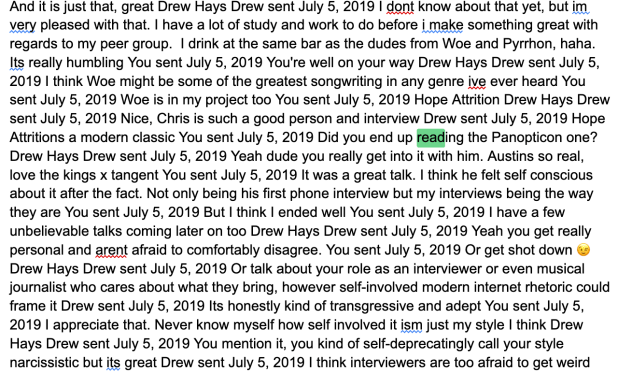
In the summer of 2021 Drew Hays died, a man whom I had never met. And yet despite never meeting him, Drew was my friend. Somewhere in 2019, I think, Drew’s manic energy erupted into my space, as he had done to many others, I suspect, charged by a love for music and reading. I don’t think Drew would have characterized himself as a reader, maybe a listener, of music, of people, but in my world of words and writing Drew was the real thing, a Reader – capital R. Ever since Drew died there has rarely been a day when he wasn’t somehow in my thoughts, and the impact his loss has had on me cannot be quantified by “Drew was a nice person with whom I conversed about life and music on Facebook Messenger.” The more time passes, the more I miss him, and I realize that in some respects that lingering loss has to do with Drew being a Reader. The impetus of me writing this, in fact, was his mom reaching out to see if I was OK. I can’t tell her or you how much that meant to me.
To be sure, Drew was also my Reader. He would read every interview, talk with me about the questions he liked, or points of the conversation he was especially fond of or found to be informative or helpful. I wrote those interviews, I interviewed the musicians I did, also because I knew somewhere someone is getting a kick out of me telling Beherit’s Nuclear Holocausto that his music was like the deconstructed dishes they cook in trashy cooking shows. That’s a real thing, as I’m sure many of you who create know, to have someone who “gets it.” In fact, you don’t have to create anything, you just have to be a person who appreciates that there are people who “get you.” That “getting it” or “getting you is what I’m calling Reader here. That someone’s antennas are not only finely tuned and sensitive, that they are tuned to your frequency. I would love to believe Drew felt like I was able to tune into his frequencies, and I have reason to believe that was the case.
To lose someone on the receiving end of whatever it is that you’re putting out into the world, whatever it is your consciously toil at to release into the world is, as I have come to realize, a difficult thing. It can paint the act of toiling and send out itself as useless. And when we begin to think that the act of sending out, of communicating who we are, is useless. Well, that’s a dangerous and unhappy place to be. I have friends, and I have family, and I am thankful for them all. But when Drew died my box got a little smaller. That’s how good he was.
Drew died for the reasons he died, for whatever made his body stop. But, to me Drew died also because of all those wonderful antennas he had. He was taking in so much, and at that time in our shared history – COVID, lockdowns, isolation, police – I think it was safe to say he was beginning to take in too much. Too much was happening, too much pain and fear and death was filling the air for him to be able to breathe. What a strange time we all live in, or have been living in, for the past few years. As a person who spends an unnatural amount of time reading about war in the early twentieth century, it seems oddly familiar – epidemics, violent flare ups, a sense of both increased hopelessness as well as the bad politics that come with that. Drew is an example, for me, a reminder, that these narrowing times, these anxiety-filled airs, have victims other than the people who succumb to physical wounds – be they disease-based or war-based. That to have less air to breath is in itself a terminal context for some of the best, most talented, most sensitive people we have. This, of course, is not to make light of the physical wounds themselves, or the disasters people endure when the world shrinks the way it has been shrinking, only to say that the catastrophe is actually more catastrophic than we think when all we do is look at the death column.
One of my favorite newer works of literature to read in recent years isn’t really that new. It’s Daniel Defoe’s The Journal of a Plague Year, in which he writes about the advance of the epidemic that upended London in 1666. And one of the things I love most about that book, if you can love anything that is about death (to me that answer to that is a resounding “yes”) is the Londoner’s preoccupation with death tolls, avidly reading the newest notices being hung in the streets that detail the ebb and flow of the plague and its human cost. I found that so amazingly (and I hate this word, but I will use it here) relatable. Especially at a time during COVID where that’s basically all I did, look at tables telling me who many people are dead.
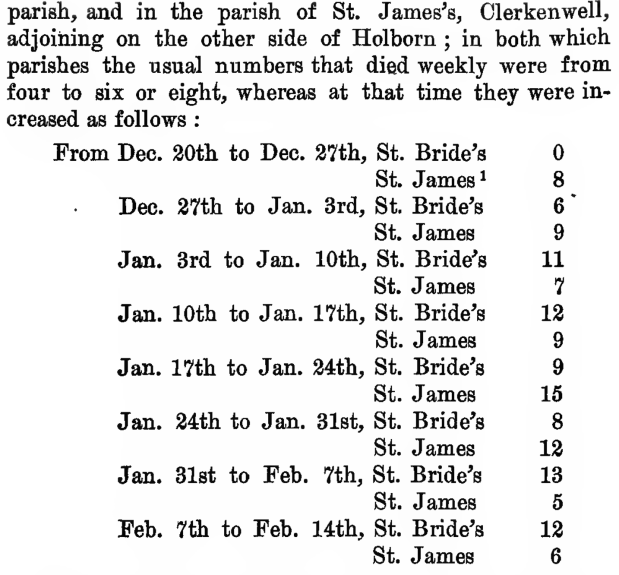
How many people died today in Israel?
How many people died today in Sweden?
How many people died today in the US?
I have asked those same questions every day these past months. Often more than once a day. More and more people are asking those questions, whether in Ukraine, Russia, Israel, Gaza, Myanmar, Iraq, Somalia, Yemen, and all over the world. More and more people are waking up and looking at their phones to see and count death.
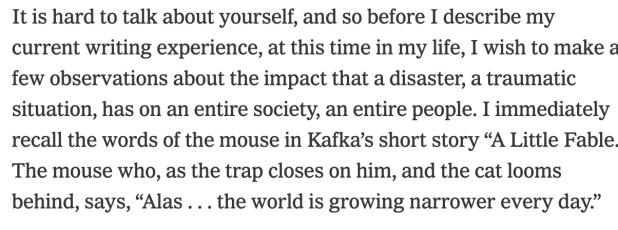
Nowhere in those tables, however, is there a number for people who just couldn’t take it anymore. People who felt their air – literally – being snatched from them, how their world was, again, narrowing. I have that Kakfa parable in mind, the same quoted in the wonderful essay David Grossman wrote in the New York Times about writing and grief, written in 2007, not long after his son was killed in the Second Lebanon War.
That’s one of the curious things about art, about writing, about making music, its relationship to air, or to the supposedly empty space that separates the person sending out and the person receiving. One thing that stands out is that it’s there, this supposed void is actually there and not only is it there it fulfills an important function. For, without that separation, without that weird substance being there we would all be screaming into an actual void. For some people that separation is unbearable. For others it is a gift. Just the fact that it exists is a wonder to me, also because we become aware of it only when someone or something is addressing us. A voice comes in, a letter, a poem, a track of brutal death metal, and we suddenly are in this wonderful dance, one that moves us, our bodies, and our minds, but also makes us realize how much space – air – is around us, causing us to rethink it.
In that way, maybe counter-intuitively, art not only needs air to be made but also makes it. Because if something wasn’t there and then it is, then that isn’t just “pointing something out” but, to an extent, making it. This makes me think of a conversation I had with Ian MacKaye about skateboarding, that to him skateboarding is to reinvent the city for your purposes. Before there were just things placed by someone else, perhaps someone who did not have your best interests in mind. Now there’s a playground.
The very real, very violent, very terrifying war going on right now where I live, where my family lives, and where Palestinian families live as well, is a monumental event of air-taking. If you’ve spent some time in this news-ridden region, none of this would be a shocking surprise. The force and brutality might be surprising, but the fact that they exist, unfortunately is not. And in that event there very physical, very tangible things happening, including, and yet not limited to, murder, displacement, sexual assault, insanity, loss of limbs, trauma, and the rest of a long list of things that happen when people choose war. Or “are driven” to war, whichever phrase you prefer. The phrases, oddly, don’t matter as much. What matters is the war, and what war brings.
And beyond the heaping ruin of destruction there are those whose air is being taken, more of them each day. The sending-out and receiving that’s so important for some, important for me, is one of the things that dies in times like these. I don’t know what it’s like to be Palestinian, but my everyday has been inundated with all the things that make me think less and cower more, a list including, but not limited to flags waving everywhere, songs written about the times, a sense of national “togetherness” that does more to freak me out than it does reassure. Again, I’m not Palestinian, but I suspect that “togetherness” aspect is strong, this hugging. I love hugging, I consider myself a full and loving and willing hugger. But not this kind, the kind that feels there’s less air to breathe, less space to dance. Less in-between stuff to use in order to send your voice out, and perhaps even receive the voice of others.
It happens to me at least once a day. I sit down and watch the news, and my body becomes physically angry and afraid and my thoughts, in that moment, shut down and die. I have to realize this is happening, and force myself out of that clenched position in order to be able to think again, but many people find that a difficult thing to do. I don’t agree with that, but that is the reality.
The space between is what you need to send out, receive, and interpret. In its lack, there is not sending, not receiving, and no interpretation. You can do that by killing someone, you can do that by terrorizing someone into the kind of fear that turns them into an object and not a person. There’s sadly an infinite variety of that thing Wallace Stevens once called “pressure,” the force of external events to paralyze you into a thing – whether those forces are a knife, a gun, the news, or worrying about money and rent.
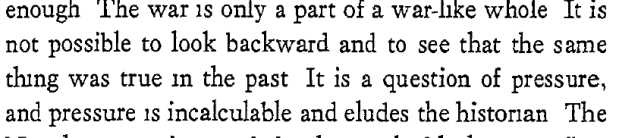
All of these have the power to kill that dance we have, the lack of which I have been mourning since Drew’s passing. Dancing alone is OK, I guess, but not my kind of jig.
The death of reading is not only the fault of wars and the people they main, kill, imprison, or silence. This is that part of the path that might get bumpy, if it hasn’t already (is anyone still here?). The death of reading lies also in the absolute lack of the interim space to make any kind of interpretation. All you need is a checklist of traits and adjectives that amount to answering the question: “Who is writing this?” If you don’t like the answer, then the writing, and thus any hope for reading or Reading, is dead. Sadly, this has been a feature also of a place that is dear to my heart (well, kind of), that, at times, was entrusted in safekeeping the ability to Read to communicate with art and text, namely the academic space, but it is also fast becoming a feature of the artistic space as well. All you need to know is the identity of the author, and, without reading, without being able to listen, you will immediately be able to analyze, criticize, and judge the text as anything from propaganda to bourgeois art. The inverse is also true, naturally.
That space of incessant judging and flash-judgment is indeed a feature of my own space, not just the academic, but social and national as well. The reality, the reality as I see it, is that people are more and more governed by those whose only concern is power and the retaining of said power, along with whatever money is there to be made via power. They don’t care about me, the people who supposedly call the shots in my life, as evident in the almost year of anti government protests that led to this war. And if I were a betting man I would gamble that Palestinians don’t feel represented either, and would protest more if they had that ability. We’re all being fucked by people who instead of caring for us are hoarding as much power and wealth as possible as an exit strategy. I’m intentionally not talking about the national narratives at play here, important though they may be, because that’s not the reality I see. Which is to say, I already live in a space dominated by judgment, by people being “questioned” over their opinions, or for “sympathizing with the enemy,” so why is that kind of thinking seemingly dominating the same spaces I need for air – art, artists, musicians, academics, etc. Why is it that a group of people whose goal in life is either expression of self or the study of other’s expression are shutting lines of ventilation? Is that the purpose of art, to end interpretation, to end air, to end what Drew did so well, Reading? Listening? To me that’s a strong “no.”
The space for interpretation and reflection is narrowing, hell, it might already be dead. The only way I know to get the air we need to breathe is through expanding the ability to breathe and communicate through that air. An ability already much too rare in this world, and one made all the more rarer by the passing of people like Drew. Maybe that’s the actual real tragedy of it all, when push comes to shove. That the ability to listen, to feel for others, to imagine their lives is rare, and tends to be placed inside the minds and souls of those who just can’t take it anymore. They die, either because they’re shot or because their antennas are overwhelmed with noise.
Virginia Woolf was perhaps the most powerful antenna the world had ever seen, and another, perhaps, victim of her own powers. This is the world at war she describes in what might be a top 10 passage in life for me. A world blind and deaf, in which only the flowers "standing there" with their "eyeless" heads.
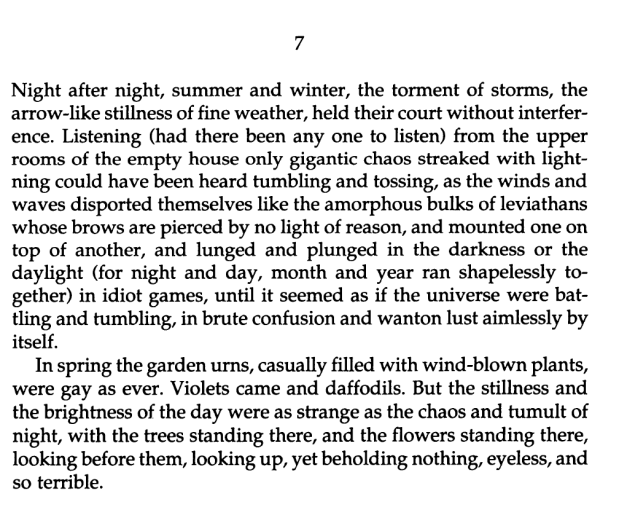
A world of tossing and pushing, of lightning and violence. And no one there to listen.
Here’s to you, Drew. You would have at least listened, or read. And you would have made beautiful music, and I would have listened.


Amen.