Track Premiere and Interview: Get Destroyed by Psych Black Metal Project Junon
Junon's stunning promo release, which emerged into our sick world early last year, really did a number on me, prompting me to both manically attempt to describe it, as well as, as the kids say, "rate" it. It represented one of those rare cases where you innocently, perhaps even coyly, click an album cover only to watch your face drop to the floor. It was weird, it was ruthless, it was weird again, and then it was ruthless once more. Urfaust meets Oranssi Pazuzu meets someone's idea of a nightmare.
Given these facial failures I was a) overjoyed to see the band sign on to release their debut full length, some of which was/is made up of said promo, via the unflappable I, Voidhanger Records and b) choose this dilapidated venue as a dark inn for one of its tracks. You can hear that track, the creeping and disturbing "Inanitas Cedit Profundo (Die Leere weicht der Tiefe)," right here, right now. What you can also do, if you so wish, is read my music-appreciation questionnaire as generously answered by the Junon mastermind. Longtime readers will notice they chose not to answer my usual question in a point-by-point style, which, I think came out great. But if you were wondering what the usual format or to which questions some of the paragraphs seem to relate to, then just check out any of the other interviews in this series.
As always, you're new to this metal blog of bones you can also check out the various interview projects I have going on as well as the weekly recommendation posts. And if you'd like to keep abreast of the latest, most pressing developments follow us wherever I may roam (Twitter, Facebook, Instagram, Spotify, Bluesky, TIKTOK etc), and listen to my, I guess, active? (no) podcast (YouTube, Spotify, Apple), and to check out our amazing compilation albums. You could also possibly support my unholy work here (Patreon), if you feel like it. Early access to our bigger projects, weekly exclusive recommendations and playlists, and that wonderful feeling that you're encouraging a life-consuming habit. It's probably a bad idea, but to each their own. On to the wonderful Junon.
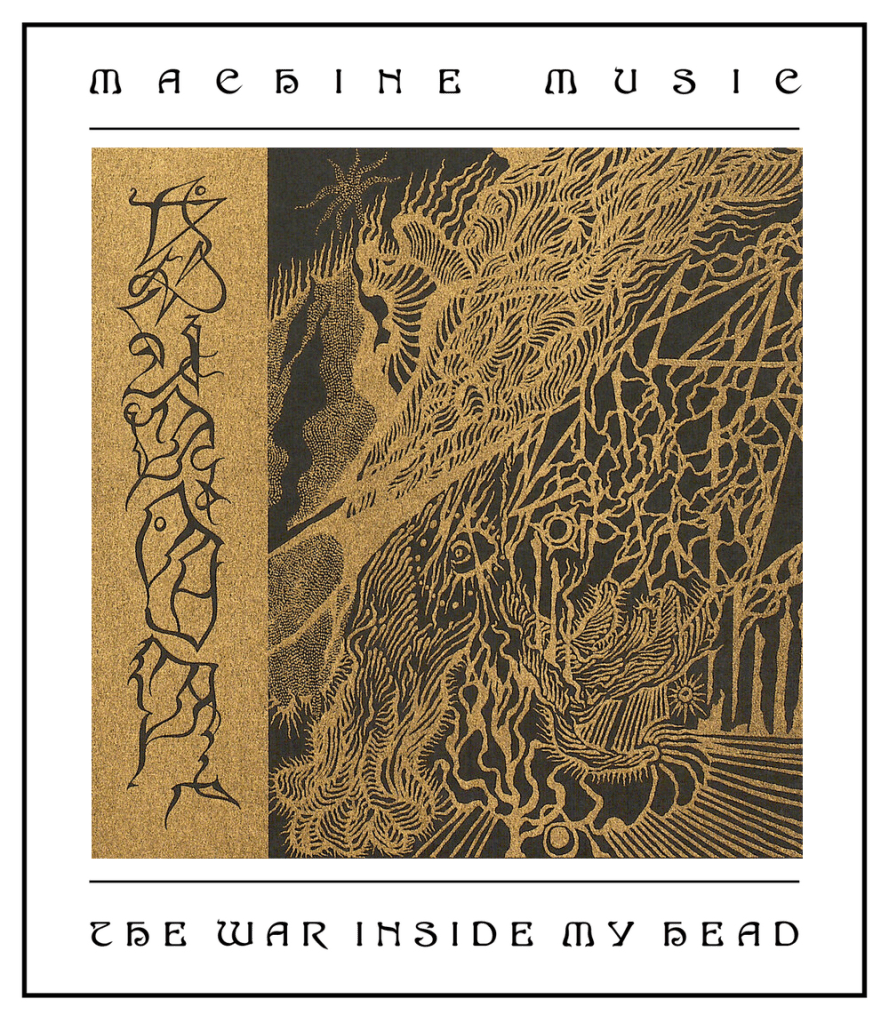
JUNON has never revealed itself in clear outlines. What surfaces is always only a partial aspect shaped by sound, atmosphere, and equally by what is deliberately kept hidden. There is no fixed form, no stable core to hold on to. Only something that manifests, withdraws, and reappears in ever-shifting constellations.
For a moment, that condition changes. A voice takes form. It does not claim to represent the whole, yet it remains inseparable from it. What follows is one perspective within this movement. An inward gaze toward the origins of the music, where composition becomes the point of convergence between multiplicity and singularity.
I grew up in the GDR in the early 1980s, when music felt like a gateway to freedom and rebellion—especially for my parents’ generation. My parents were deeply passionate about music, and during her pregnancy, my mom would even play Uriah Heep’s “Gypsy” to her baby bump. At the time, she considered it the heaviest song she knew and hoped it would spark something in me. Spoiler alert—it did.
Music was always playing at home, and at some point I became very good at recognizing songs and artists. Deep Purple and Pink Floyd were especially present—“Child in Time” and “Fools” were in constant rotation, and from Pink Floyd it was mostly Animals. I was also deeply impressed by Ennio Morricone’s “Man with the Harmonica” and Depeche Mode’s “Behind the Wheel.” Their dark, mysterious atmosphere left a strong imprint on me and planted an early desire to make music myself.
Around the time of German reunification, my parents gave me a cassette player and a few tapes—mostly rock ballads and Perfect Strangers by Deep Purple. Through school friends in the early ’90s, I discovered Guns N’ Roses, and Use Your Illusion I & II became the first albums I bought with my own money.
I grew up in the middle of nowhere, without access to record stores—especially in the years right after the fall of the Berlin Wall. If you were lucky, you might find a few rock or heavy metal albums in a library. Otherwise, I searched every CD shelf in supermarkets whenever I had the chance. Eventually, I was able to order CDs through a catalog and picked up Pearl Jam’s Vs., which I still love. After a long search, I also found Rage Against the Machine’s self-titled debut.
Around that time, I saw an ad for Sepultura’s Chaos A.D. on MTV. The intensity of the vocals completely fascinated me, and I quickly became a fan, trying to get my hands on everything by Sepultura.
We even printed our own band shirts because there were no merch stores, and we felt like the coolest kids around. That led to new conversations in the schoolyard and eventually to my first death metal tapes: Napalm Death’s Utopia Banished, Morgoth’s Cursed, and Dismember’s Like an Ever Flowing Stream. It was incredible—but I still wanted something darker, which led me to diSEMBOWELMENT’s Transcendence Into the Peripheral. That album completely blew me away, and I still love it today [for an interview about the making of this album, see here].
Later on, I kept discovering albums that shocked me so deeply they changed something inside me—records that also taught me a lot about the technical side of making music. Many of them became some of the most-played in my collection:
Mayhem – De Mysteriis Dom Sathanas
Emperor – Anthems to the Welkin at Dusk
Ved Buens Ende – Written in Waters [see interview here]
Dødheimsgard – 666 International
Fredrik Thordendal’s Special Defects – Sol Niger Within
The Dillinger Escape Plan – Calculating Infinity [see interview here]
Meshuggah – Nothing
Mayhem – Ordo ad Chao
Abigor – Time Is the Sulphur in the Veins of the Saint
Deathspell Omega – Fas – Ite, Maledicti, in Ignem Aeternum
and Blut aus Nord – Cosmosophy.
Each of these albums opened new perspectives—compositionally, texturally, and in terms of sonic extremity.
I was also lucky enough to see The Devil’s Blood live once. I usually don’t connect strongly with classic heavy metal, and initially I had my reservations. But I love psychedelic and space rock, and that changed everything. What Selim (R.I.P.) and Farida later created resonated deeply with me.
These days, I hardly listen to metal anymore. I spend much more time with Radiohead, Chelsea Wolfe, Emma Ruth Rundle, and a lot of indie, wave, and alternative music. I also love Billie Eilish, and vocal performance has become almost more important to me than other instruments on a recording. These are also the artists I’ve listened to most recently—their atmosphere tends to ground me more than anything else right now.
When it comes to underrated albums or recommendations from a local scene, I tend to see things a bit differently. It is my spiritual conviction that every person is exactly where they are meant to be. Everything is subject to entropy; everyone is given their tasks and has their own path ahead of them. Some processes unfold internally, others externally—sometimes in parallel, sometimes offset in time. The more you embrace this and trust the process, the easier everything becomes.
We live in a time of immense creativity, with an overwhelming volume of output. I’m grateful for the bonds and relationships that have formed in the past—and those that will form in the future. Some of them carry a kind of magic. Astral Adore, Akantophis.

