Machine Music's Albums of the Decade: An Interview with Gorguts
[This is the 60th installment of the Albums of the Decade series of interviews. For the rest of the series go HERE.]
Artist: Gorguts
Album: Colored Sands
Year: 2013
Label: Season of Mist
Favorite Song: "Absconders"
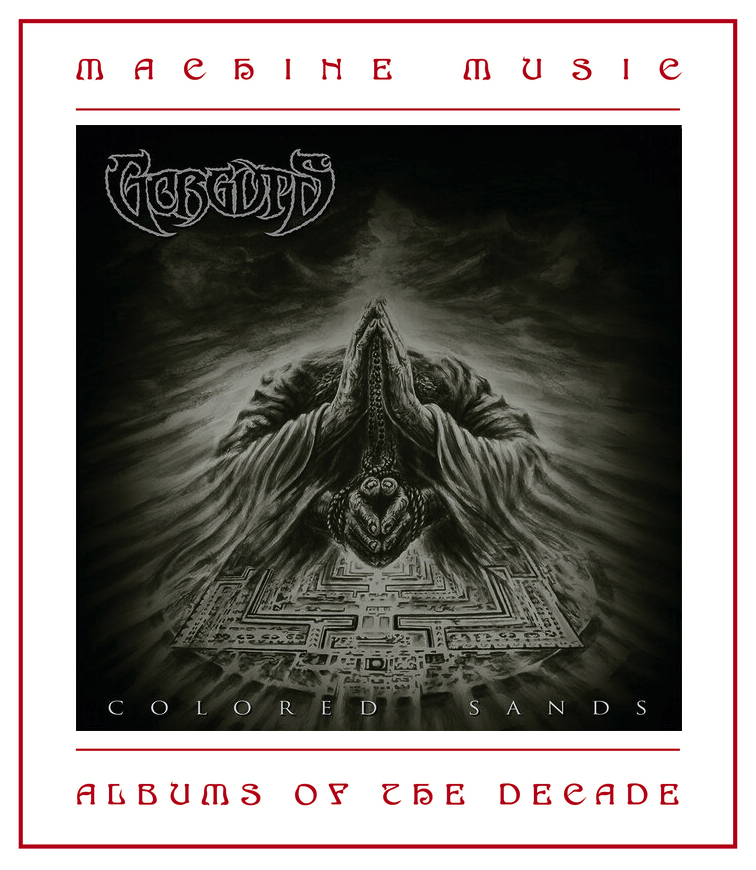
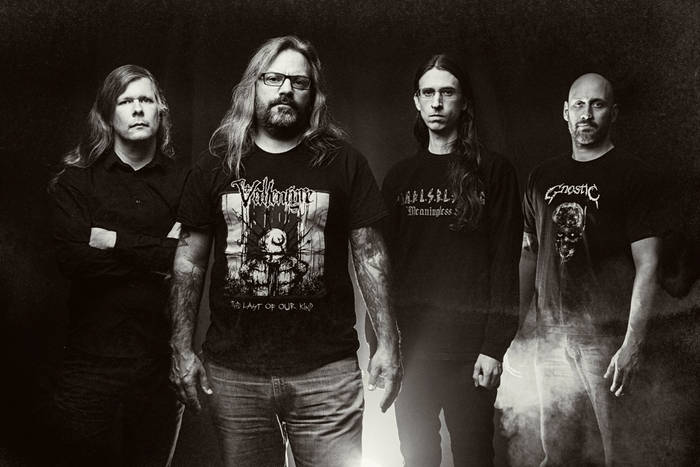
The Bare Bones: Colored Sands is the is the fifth full-length from Canadian death metal band Gorguts, spearheaded by mastermind Luc Lemay. Coming 12 years following From Wisdom to Hate and marking the reformation of the band, it features newcomers Colin Marston (Krallice, Behold… the Arctopus, Dysrhythmia) on bass, Kevin Hufnagel (Dysrhythmia) on guitar, along with drumming from John Longstreth (Origin, Angelcorpse, Dim Mak).
The Beating Heart: Colored Sands was and wasn't a comeback. It was a comeback, of sorts, since, well, Gorguts ceased to exist. Luc Lemay packed up his death metal genius, dabbled in making crazy music (see: Negativa), and learned the viola. Colored Sands wasn't a comeback, however, since Luc Lemay continued to exist on our strange plane of existence, carving wood, taking walks, thinking of riffs that would make lesser humans faint, and reading books about Tibet. These converging and disparate strands shifted through space-time, never didn't exist in space-time, until that moment when Gorguts was to re-emerge armed with some of the most sophisticated and talented musicians on earth (see above personnel list) in order to unleash that thing death metal has always aimed to unleash – awe of far-flung cultures, a profound appreciation of art and its relation to spritual ritual, and a deep reverance for soaring mountains. You know, real knuckle-dragging stuff.
Eventually, Colored Sands would be coupled with the EP that would end up act as its follow-up act – the incredible Pleiades Dust – to form a kind of Gorguts-ian microclimate of supreme atmosphere, crushing riffs, and hyper-intellectual subject matter. That, the passage of time, and the fact that the Canadian bearded man of death metal wisdom and his merry gang of super musicians are ready to release a new full length album (!!!!) meant this interview was coming like an unexpected twist of Buddhist fate. Will this be the last of the AOTD series? It feels like that for now. So, going out with a bang (read "bang" with Quebecois accent).
Also, in keeping with the spirit of brilliant people and music, musician and fellow over-thinker Calder Hannan has a great discussion of "Forgotten Arrows" off of Colored Sands on his Metal Music Theory channel that serves as a good complement for this conversation with Luc. Check it out here.
HEAD'S UP: Our new compilation benefitting World Central Kitchen is out now. As always, you check out my various interview projects and other cool shit. And if you'd like to keep abreast of the latest, most pressing developments follow us wherever I may roam (FALSE!) (Twitter, Facebook, Instagram, Spotify and now also a tape-per-day series on TIK TOK!), and listen to my, I guess, active (?) podcast (YouTube, Spotify, Apple), and to check out our amazing compilation albums. You can support my unholy work here (Patreon), if you feel like it. Early access to our bigger projects, weekly exclusive recommendations and playlists, and that wonderful feeling that you're encouraging a life-consuming habit. On to my chat with Luc.
How's it going?
Luc: Oh, always busy. I've been working on my car all morning, with emails in between. So it’s all good. Always busy, always something to do.
At least it sounds like a varied buffet of activities.
Luc: [Laughs] Oh, yeah. I'm not a one-trick pony. I'm so busy all the time with all kinds of stuff – working at the workshop, since we've been done with the [new] record. I'm a woodworker. I do a lot of carving, so I did the sign installation for the county here. I live in a very small community, and they requested me to build some signs for the city hall and a "Welcome to the County" sign and stuff.
That's amazing.
Yeah. So I installed that, and then, as I said, I had to do some work on my car this morning. But I’m very, very lucky because I live on farmland. It’s not my property, but it’s a very good friend of mine’s, so I set up my studio here in the middle of a cornfield, it’s like 200 acres or something. So it’s really a great place for creativity. It's quiet. If you want you can go for a walk in the woods…. I get my fix of cities when we tour, which I love, the people and everything. But then afterwards I like to go the other way, down the gravel road, and to be on my own. So it’s all good.
That’s amazing. Just as a weird side note…. Actually I'll introduce myself and explain what we're doing here, and then the side note might make more sense. Around eight years ago I started what felt like a dumb idea – my life is filled with things that started off as dumb ideas. It amounted to this: I returned seriously to heavy music around 2009, after being sick of it for a few years. So 2009 was kind of the beginning of my second teens, that’s how I think of it, in terms of how hungry I was for new music and how invested I was. So when the decade was about to end, I was like: "Okay, how about I interview every person who made an album I liked in the 2010s." So that was the dumb idea. Not because it’s a bad idea, but dumb because I thought no one would ever want to speak to me about it, because it would be silly, and whatever. And so today marks an auspicious occasion, not only because I get to speak to you, which is already great, but because this is interview number 60 in that project, also possibly the last.
Luc: The last one, you said, possibly?
I’m saying it might be the last one, yeah. I think it’s run its course. And 60 is a good round number.
Luc: That’s a lot of work. Doing the editing and everything, and preparing the questions. Sometimes I think people barely scratch the surface of the amount of work….. You’ve got to know what you’re talking about, too, to ask the questions, you know?
This is all very true, Luc. And I realize what it has meant for me. So I realize we’re starting the interview by talking about me, but it’s very much par for the course for me.
Luc: No, no, it’s not a one-way street. No worries.
Anyway, it began as a silly idea, a pipe dream, and it really evolved over the years into a vessel for my intense questioning of what art is, why it is made, and how it differs from one person to the other.
Luc: Yeah.
Because I write, I’ve often coerced these conversations into me trying to figure out stuff about making stuff creatively. And my day job is, I’m a literature professor, so that’s kind of my angle on it.
Luc: What literature, what period?
So mostly English-speaking, but I dabble in anything that’s translated and interesting. I’ve been doing more and more Hebrew stuff, even though that’s not my career, but it is my soul, to an extent. And it’s the language I write my creative stuff in. So there’s some interplay there. And the period: I study war literature.
Luc: You mean like correspondence and stuff?
Really, kind of anything. I’m very eclectic that way. So if you were hiring me for a job, Luc, and I were forced to put on my serious face, I would say novels and poetry, World War I, World War II, later 20th century, early 21st century. But really I’m all over the place, and I do correspondence as well – diaries, testimonials. Anything that’s interesting.
Interestingly, given your comment about the gravel road: I just finished an academic book about war and nature, so how war changes your relationship to nature. So that’s where I’m coming from.
And those interviews, when they’re good and they’re informative and we talk shop a bit, even though the shop isn’t always necessarily musical shop but artistic shop, I find they’ve really helped me a lot. And so it’s a gift, but it’s also a lot of work [laughs]. And the interesting tidbit, given that context, is that my most recent interview was with a person whose music I greatly admire and who makes furniture.
Luc: Okay!
So this is an immediate woodworking connection.
Luc: [Laughs]
So, it was Will’s idea [WIll of Season of Mist, shout out Will for setting this up] to include my conversation with you as part of this series and talk about Colored Sands. And Will was right. Will is a smart guy. But in the back of my head, I realized that a conversation with you could also have fit in a different series I’m doing, which I won’t bother with right now, which is called Pillars of the 90s. Because my first teenage years were the 90s, and my first immersion into heavy music was then, that was an inspiration. And because I think a lot of the bands working today are really indebted to a lot of the stuff that happened in the 90s, I interviewed bands from back then that I feel really still matter now.
And so you would have fit there as well. So, it’s testament to your durability, I guess, is the word, resilience, all the words, speaking about a lot of work, right? So it’s a lot of work to not only be active throughout the time, but stay relevant and kind of, so that we can talk about great albums that you released in 2016, 2013, and then in 1998 and so on, that’s not a common thing. But it might make its way through our conversation here, because I do want to take advantage of this for that as well.
So that’s the context of what we’re doing. Does that sound okay?
Luc: Sure. I’m all about conversation. It’s all good.
Okay, so as with all good conversations, they’re a combination of being very prepared and being very loose, and let’s begin with the prepared part. The prepared part is that I have a first question that is a set question. I always open with this question because I like it, for no other reason: Do you remember a time, probably as a younger person, where you heard an album or a song, or saw a band live, or saw artwork or whatever, and you felt like electricity go through your brain, and you went, "Oh shit!" Now, the "oh shit!" can be any one of different things. It could be you’re scared, it could be you’re surprised. I think it’s always something between those things, but mainly that it felt a new door opening, that there are new possibilities that you never thought of.
Luc: Absolutely, I have a few milestones like that. The first one, the furthest one I can remember was when my cousin gave me the vinyl of Maiden Japan, with Paul Di'Anno singing. It’s a live Iron Maiden release. I think it's an EP. There’s not too many songs on it anyway. And they were playing "Running Free," and I remember the drum jam and the fills [mimics the drum fill], and I was like: "Whoa." And it’s just a fucking drum fill! But it really got me. It resonated with something. So that would be the first one.
Then, after that, when I got into heavier music, when I discovered Possessed’s Seven Churches, Jeff Becerra’s voice. He had a great voice when he sang, but I remember what made me fall in love with the aesthetic of death metal was, let’s say, after the attack of the note, the grit and the sustain of the voice, and you have that reverb tail to it. I was like: "Holy shit, this is the heaviest shit I have ever heard." So, when I heard Scream Bloody Gore a year later, Chuck was like the second person that brought me back to that sustained note that Becerra had, which I put in my music everywhere. They’re my first death metal heroes. And it’s just a sustained note, the grit of it and the space that the reverb creates. It was like: "Wow, this is the sonic brushstroke that I was looking for." As minimalistic as it could be – It’s not even the whole band or whatever. Of course I like the whole band and everything, but it was these little elements, it was like opening a door to a sonic place that had me going: "Wow, how can we go there?" That had such a huge impact.
Of course I like Reign in Blood and everything, and they had a great impact on me, but not as much as Jeff Becerra’s voice or Chuck’s sound on Scream Bloody Gore, when he was playing those tremolo riffs and you hear them with the production [mimics an angular guitar sound] that kind of sits in the riffing. Yeah, it’s still evil. So, as minimalistic as these elements can be, looking at them isolated, when you put them into context, it’s like: "Holy fucking shit."
So I had a question about that. You just said the word, "context." When I was preparing for this, that was one of the highlighted words for me. We might get to it more later, but I want to talk about it it here now, because the examples you gave, some people might say are examples of fragments.
Luc: Yeah.
Right, because the drum fill is a moment, it stands out from its context, but you remember the moment.
Luc: Yeah, but maybe because of the energy or something. And I thought, anyway, sorry, keep going.
No, I get what you’re saying. But I think there’s an importance in how we describe things, not just how they are. And so for you, there was something that popped out of the context, and another person coming in and hearing you speak like that would say: "Look, you’re just describing a fragment of the music, not the music as a whole." But it seems to me, from how you describe it, and I might be taking an educated guess here, that you strike me as the kind of person for whom a fragment can always be a potential opening of a new context.
Luc: Of course! It’s like you cook a meal but you omit the spice: it’s not going to be the same in the whole context if you take it out of the equation. Especially for death metal, if I come back to Chuck’s voice and Becerra’s voice, I mean, the music, if you put Seven Churches with a different vocal aesthetic, it’s not the same record anymore. Not at all. So they’re a very important ingredient. But as a whole, it was: "Whoa, this is a storm of something that I never heard before," because of those isolated elements.
Yeah. You know what it reminds me of? I was talking about the 90s interviews I did – I did an interview with Renato from Disembowelment a few years ago, and I talked to him about that moment on their album where he kind of growls over clean acoustic guitars.
Luc: Yeah.
Right. And so that’s almost like the opposite, right? The only reason that growl stands out as much as it does is because it’s almost like the carpet was pulled from under it.
Luc: It’s taken out of a typical death-metal equation. It’s in a different frame. That’s what makes it something different, which is awesome.
Okay, so the challenge, obviously, when you're a musician, is that there’s always this push and pull between the ingredient and the totality of what you're doing, right? This moment, where does it sit in the grand, I don’t want to say "narrative," but say picture of the song, for instance, or even the album, right? And so, sometimes it’s a gradual process, sometimes you just move moment by moment. Well, this moment feels like it should follow this moment, but then you zoom back and you’re like, no, that’s not what it needs to be right now. The accent and the context are not what they need to be.
Luc: Yeah.
And it’s one thing as a fan to experience that. So I guess my question here is, as a musician, how do you preserve that emotion you had as a listener of saying: "Oh shit, that!" And how do you then create it for other people?
Luc: For me, from a composition perspective, it’s like a book, like a movie. We’re telling stories here, and I'm not even talking about lyrics. Just sonically, we’re telling stories here. Let’s say you listen to a grindcore record, which I love. Oh, I love Gadget and these bands. You’re aiming for an aesthetic, but it’s full-team, 25 minutes, we’re done.
Yeah.
Luc: But you know what you’re going to get. But my point is that for the type of music that we do, I like to create moments of surprise. It’s like: "Whoa, never thought we were going to turn that way!" A change of tone, a change of rhythm. If you maintain something for 10 minutes, at some point it’s like: "Okay, what’s going on now? Where are we going now?"
Yeah.
Luc: So to me… Does that answer your question?
Yeah, I think it does. You’re interested in this, right? You were surprised. So you’re interested in generating surprise for other people? I mean, that would be fair to say, right?
Luc: Of course! Yeah, because it’s sonic. I call it a sonic narrative. For example, sometimes when I have a conversation with younger bands, they ask me, hey, what do you think of this and that? I say: "It’s cool, great riffs and everything, but I feel the song should have a different beginning, different riffs," this and that. Yeah, sure.
Sure, yeah, because the riff is, it’s interesting you mentioned the riff. Okay, so no one would accuse you of not caring about riffs. That's not an accusation that someone would make about you. But at the same time, the riff is not the be-all, end-all element.
Luc: Not at all!
It has to be supported by other things in order to stand out, right? That would be fair to say?
Luc: It's all about that. That’s what I like. The composition teacher at the conservatory was saying, first of all – I'll come back to the riff in a second. Composition is always about making decisions and solving problems. One note after another. It’s like an author writing a story, I guess. You can have the best riffs in the world, which would be the characters in a story, but if they’re put in interaction the wrong way, it’s not going to stick. It’s not going to work. So there’s a lot of work in the arrangement. So, coming back to the beginning of the song: to me, one of the essential things when I write a record, for the general context of the record, the songs need to have a very strong beginning and a sense of identity. There’s no way you can confuse one song with another just from the beginning. So when you have a couple of songs written for a record, like: "Song one, it’s fine. Song two, of course, three, four, five." It’s like: "Okay, how are we going to start this one?" Another example I give often: if you read a book and every chapter starts the same way, you’re going to get lost a bit in the storytelling. It’s like: "Oh, wait, let me go back a bit." Of course, you don’t do that on a record, but you need to have that novelty.
And then: "Okay, where do we go after this riff?" Just creating surprises. Because to me, the song has to work even without leads, without…. You’ll never hear me say: "Oh, wait, there’s vocals, now it’s going to work." No, no, no. It has to work with the themes one after the other. And then you can create surprises with the tone of the guitar. You can play the same note and just change the tone drastically, that creates a surprise. Changing the beat. So there are so many options, but you’ve got to get creative with those. But anyway, does that answer your question?
It does, but you mentioned learning composition, and I know you did that, but to what extent did that change your relationship with the riff? So, death metal can be a very wide place.
Luc: Absolutely.
And it can also be a very narrow place.
Luc: Yeah, sure.
Now, in the narrow place, it’s a very riff-centric genre. I’m not talking about the wide place, right? And that could be very seductive, I guess, in a way, because really all you need to do is come up with a compelling riff, come up with a second compelling riff, maybe a bridge, whatever. I don’t know. I’m not a musician. I don’t know how that works. And then come back, only slower, and you’re good [laughs]. There’s something about the riff in death metal that makes me always think of "power," because you always have this power to press that button. If I press this button, someone’s head will move.
Luc: Yeah, yeah.
Okay, so that’s one statement. And then the second statement is that you went to learn composition. And so I’m wondering, to what extent did learning composition change your relationship with the riff, or with that button?
Luc: Learning composition, I don’t think it changed anything in the riff department. But, it created for me….. How do you say that in English… Imagine a toolbox, okay? It added a lot of tools to my toolbox to be creative with structure, with the form. Because to me, even classical music or any kind of music, it’s all about, again, the challenge. I’m not saying coming up with a good riff is easy. No, it’s always a challenge. But the structure matters. And, to answer your question, studying composition and different types of music really enhanced my toolbox to be more creative with the structural aspects of composition.
Because, to me, that’s where it happens. That’s where the surprises happen. "Am I repeating this riff too many times? Could it be longer? Should we go into a clean part?" There are so many rabbit holes you can go down. But again, the composition studies, the fact that I did orchestration, and I loved orchestration, I would do it on my own even without homework. I just loved it. So it gave me a sharper ear and vision. I say "vision" because I like to see music on paper, because you make decisions differently than if you just hear it, from my perspective.
Is that why you loved it?
Luc: Oh, yeah, because I do visuals, art. I used to draw a lot when I was a young teenager and younger than that. So maybe that’s why looking at a music score really hit something with me. So, when I came to understand the architecture and how every thread was put together, it was like "Whoa, this is awesome." And it develops a way of thinking, once you work with music on paper, that kind of stays with you. So I’m pretty sure that in the long run it’s going to affect the decisions you make, even if you write a fucking grindcore song. It’s all in your decisions.
This all makes complete sense. One of the reasons I thought of it, and this is touching for a moment on Colored Sands is that there’s this small breakdown, at 4:40 of "Le Toit du Monde."
Luc: Yeah.
There’s a moment there where you say: "Oh, he pressed the button now. He decided this was the moment to press power." But I would not have experienced it as that had he not waited until now to, shall we say, employ the nuclear option.
Luc: Yeah, yeah [laughs].
I may be overcomplicating things, because I’m an overcomplicating kind of guy…. Have you ever read Moby Dick?
Luc: No!
No. Okay, you should. I’ll give you a five-second version of Moby Dick.
Luc: Sure.
Moby Dick is a very long book. And in essence, it’s a very simple book: A guy really wants to catch a whale. And at the end, the whale kills him. There you go.
Luc: Yeah.
And I would argue most people know this story, it’s such an iconic book. Everyone knows the narrative. But Moby Dick is not 900 pages of a guy chasing a whale. It’s 900 pages of asking questions: What is a whale? What is white? What are the different kinds of whales? Who are the people serving with me on this ship? Why are they so different from me, why are we all following the captain, and why is the captain so weird and melancholy and speaks in Shakespearean poetry?

So it’s 900 pages where you’re introduced to the idea of getting to the whale in the beginning and you’re introduced to the whale at the end. But the whole middle is really an attempt to delay the whale coming.
Luc: There are many, like, parentheses, you mean?.
Exactly, a lot of parentheses. I’m very interested in parentheses in general. The whole book is a parenthesis. And the way I read that book is that it’s a comment about telling stories. Because the cheap way to tell a story is kind of like what I’ve been alluding to before with the riff, which isn’t to say it’s easy. Writing a really short, brutal story is not an easy thing to do – I’m not knocking that at all. But I am saying that it’s about making a comment on how easy or how difficult it is, and how dangerous – the word "dangerous" should appear: that it’s dangerous to overstep your bounds, that it’s dangerous to create something that has that allure of, maybe, violence, of power, and that you need to recognize, by holding it back, that it can’t come all the time, not just for sonic narrative reasons, not just because the listener will get tired of it, and not just because you don’t want to be boring, but because it’s kind of dangerous and kind of weirdly inhuman to just keep banging on that button.
Luc: And then it can have the opposite effect, if you push that button all the time, riff-wise. It’s like: "Okay! We went full circle right now, so we’re kind of done." You’ve got to save some cards in your hand for when it’s ready to pull them out. It’s all about surprises. That’s how I picture it.
But in a way….. I’m sure you’ve been told by people much smarter than I that, for instance, Obscura, which would have been the album—had we talked about the 90s, we probably would have talked about Obscura. Obscura was a kind of shift, a tilt, in how people looked at death metal and metal in general, that really resonates to this day, to the point that some conteporary bands are so angular and so spacey about how they look at death metal that I’m guessing a death metal head from the 90s would not recognize those bands as death metal at all.
Luc: Mm Hm.
They sound more like a Ligeti version, a Penderecki death metal variant that is more Penderecki than it is death metal. So there’s a shift there that makes the whole discussion of the riff, the tight riff, the palm-muted riff, you know, the classic death metal stuff, that kind of questions it.
Luc: Just to add something about the riff and Obscura, just for a brief moment. When we wrote that record, we verbally, I mean, we sat down and we verbally made a manifesto in which we intentionally we avoided all the ingredients that make a death metal riff on the record.
Amazing.
Luc: No picking. No thrash beat, no Slayer beat. It’s either a dissonant, cluster-ish palm mute, or open strings, or whatever. Even if you have the riff of the year—
Yeah.
Luc: And it’s tremolo picking, it’s not going to make the record.
Why? Why did you have that conversation?
Luc: This way, we forced ourselves to expand our language and stop using what we knew, which was a comfort zone. Like, Erosion [of Sanity], it’s all tremolo picking. It’s fine, but there are a million bands doing this. How are we going to find our voice? Those moments could have happened by accident, but it would have taken way more time to find our own voice. Instead, we forced ourselves: "We’re not going to do what we’re used to."
Yeah.
Luc: We still have enough taste to say: "Hey, that sounds evil!'
[Laughs]
But no tremolo picking, no fast picking, no Slayer beat. That’s it. And I remember when everybody was bringing their riffs to the table in the jam room, when we would start a new song, the rule of thumb was we don’t look at the riff, because it can influence whether we keep it or not. Some riffs look like: "Holy shit, this is so technical!" but if you just close your eyes and listen to it, it’s kind of static after a minute. But if you close your eyes and you listen to the riff go [mimics evil sounds] with all these sounds and the slide, and you’re like: "Holy…. How do you play this!?" And then you look at the actual riff and it’s a two-trick equation.
That’s a really interesting reverse of what you said, not at first, but just recently: that maybe because you’re such a visual person you were attracted to notation, because notation was a different way of experiencing the music and adding to it. But now you’re saying the visual thing could also be a trap, because a cool-looking riff can be…
Luc: ….Yeah, but it depends on what context. The thing is that at the end of the day, music is meant to have your headphones on, close your eyes, and go for a trip. So if you make decisions to choose who’s the next sonic character to be part of the music and you make the decision because: "Oh, dude, this riff looks technical" – maybe if you listen to it for five minutes, you’ll be like: "Nah, you know what? Maybe it’s not as good as I thought." But if you make the decision just with your ear, you’re at the arrival point where it’s going to sit in the long run anyway, after consumption. Does that make sense?
Yeah, I wasn’t trying to trap you, but I think it’s really interesting, and it does make me think that you need to read Moby Dick, because I think what literature and music have in common, other than a general idea of pace and rhythm, is this relationship to the visual, right? Now, in the metal world, obviously there’s a loaded relationship to the visual, because you have to have a cool cover and your logo has to be squiggly or evil or angular, or whatever. So we have this ongoing relationship, and same with books. Books have covers, books have illustrations. But the core of the work of art has a complicated relationship with the visual…
Luc: Yeah.
… because the music, while it can be experienced as generating visuals, isn’t visual in its essence.
Luc: It generates images, for sure.
And literature can generate an image, but it isn’t visual. And the reason I say this is because I’m going back to Moby Dick. The captain, his name is Ahab. Ahab ruins everyone’s life, right? Because he’s the guy who decides he needs to take vengeance against a supernatural being that can’t be killed. And had everyone closed their eyes and not seen that Ahab is this cool-looking dude with one leg and a scar all over his face, they may not have fallen into the trap.
Luc: Yeah.
Because they’re so fascinated by the image, not just by the man and his message but by the image of him. Somehow literature is the response to that kind of experience, and in a way music too. And so what I feel like asking you is: have you ever done anything like that again? Have you ever done a verbal precondition when you recorded an album after you did that with Obscura?
Luc: Yes and no. Let’s say on Pleiades [Dust].
Yeah.
Luc: I’m a big fan of Deathspell Omega, all their EPs, 20-something-minute songs. Love it. Penderecki symphonies, they’re all like 30 minutes. I love it – peaks and valleys. Also I by Meshuggah. I wanted to write something with a long-form structure. That’s what I wanted. So I forced myself to write a sonic story. I like to call it that instead of a song. "Song" sometimes sounds more like a songwriter thing. to me. I like to call them paintings with sounds. My main goal was to say: "I want to take my time and tell a story with sound for about half an hour." So I made very different decisions to stitch everything together. And, yeah, it affects the kind of riffing, because on those types of compositions you can go a long way just holding the listener, playing only two notes, playing with volume. Like in classical music, you can go a long way just with dynamics without having to change the melody. Yeah. So it forced me to try things I’d never done before, to answer your question.
So, that kind of, shall we say, opening of the chakra. Oh, by the way, I had another fun side note for you.
Luc: [Laughs]
This one involves a prop. Just a moment. I might get into themes and lyrics a bit later, but I did not realize Pleiades’ Dust was about the destruction of the House of Wisdom. And why is that funny? Well, I have a novel that came out this year. You can’t see it because of the blurry Zoom background thing. It’s in Hebrew. It doesn’t really matter. But the name of the novel in Hebrew is Dust.
Luc: Get out!
There’s more! The novel involves different plots, because I’m dumb. It involves plots from different times. And one of the plots is kind of a scholar who experiences the destruction of the House of Wisdom.
Luc: Get out.
Not kidding at all.
Luc: What a coincidence.
I mean, I literally just figured this out. "Dust" for me was a theme, because I have three novels. The first one has a "diamond" in the title, and the second one has "coal" in the title. And this one was dust. So it’s a kind of degradation. And also the theme of things deteriorating to dust, and dust being a kind of composite in the recreation of things in the future.
Luc: True, there are many angles we can look at it from. Yeah.
So that’s where I was going with "dust." But I was always fascinated with the House of Wisdom, because it’s such a beautiful story.
Luc: A beautiful story.
It’s a great story about scholarship, which I always love, about books, and about the destruction of books. It’s a story about— this is very apropos of Moby Dick, and maybe my discussion of the riff, maybe that’s an unfair discussion of the riff, but still— how random violence can just pop up and destroy very intricate, beautiful things and lives, and just randomly appear, like, you know, the Mongols.
Luc: Yeah, exactly. And that’s also a picture of knowledge being destroyed. And in Pleiades Dust, that’s the angle I took. If you read the first couple of verses in "Wandering Time," I talk about knowledge, but also about being a wandering person.
Yeah.
Luc: And I came up with this angle because I watched a movie from a Quebecoise filmmaker, and they brought a bunch of university professors and they had a conversation, and that was part of the movie that really gripped me, the topic of their conversation. They were talking about how knowledge, throughout the course of history, kind of changes places on earth. Let’s say in the Renaissance it was in Italy, and then it left Italy and popped out someplace else, and they talk about this with really specific examples. And I was like: "Wow, isn’t that amazing?" Knowledge, because of people being in relationship with ideas, makes its home in a place in the world, and then for some reason it vanishes and reappears someplace else. So that was the image I wanted to reproduce in "Wandering Times." I talk about knowledge that just appeared where Baghdad is, and then there’s the dream to build the library and all that…. And what a beautiful story.

So this is really hitting a lot of – I’m making a mixed metaphor right now – but a lot of the cylinders for me, firstly because I’m writing a book right now that has all wanderers in it. So all the characters in the book are a form of the wanderer. And I think that not just the wandering of knowledge, but the knowledgeable person as a wanderer is a very interesting, inspirational thing for me.
Luc: True.
James Joyce, an author I love, a very famous Irish modernist author. One of his things about Ireland is that he thought Ireland was special and then was ruined, because Irish spirituality, the form of early Irish Christianity, and even before that, was based on wandering monks.
Luc: I didn’t know that.
Yeah, so the most famous ones were the wandering monks who took a trip from Ireland and converted a bunch of pagan tribes in Europe to Christianity on their way on a pilgrimage to Rome. So they wandered, they spoke, they converted people, and then they continued their wanderings. And in Joyce’s mind, the second Irish spirituality stopped wandering and got stuck in monasteries is when it died. So for him it was very important, and this is very relevant, I think, to what you described as surprises in a sonic narrative. Because it’s a trip.
Luc: Absolutely. But I just want to add something to the wandering thing. I think it’s a beautiful theme, in the sense that, can you imagine a thinker, any kind of thinker, and he’s a wanderer. He would live in some part of the world and then wander, maybe like a pilgrim might, and discover another place in the world on this trip. And that place would make his ideas flourish more than if he had stayed in the previous place. You understand what I’m saying?
Yeah.
Luc: It kind of rings the same string as when I told you, oh, I like being in the country, I feel creative here. Would I be as creative if I were in the city? So that wandering thing is a beautiful thing.
So this kind of gets me back to Colored Sands, but in a weird way it gets me back to Colored Sands through its themes, which I did not expect, because in a way Colored Sands is a pilgrimage. It’s your pilgrimage, or a kind of spiritual homage, a very multi-angled look at Tibet. And Tibet is a very spiritual place. And the Dalai Lama, who’s part of the narrative, is a wandering figure of wisdom. That is very central to that place.
Luc: Yeah.
And I might add, as you said before, centers of wisdom are in one place and then they wander. Well, sometimes they wander because of horrendous violence.
Luc: Like in his case – he had to leave.
His case, Baghdad is another case. So sometimes the wandering is pushed out. Sometimes you don’t leave home because you want to.
Luc: It’s not intentional.
Yeah.
Luc: Yeah, that’s what you’re saying.
Yeah. That’s the accident of history, some person might have called it. And so, in its theme, what made Tibet interesting to you? Because you’re in Quebec, which sounds like Tibet a bit [bad joke alert!] But what made Tibet interesting for you? Did you think about Tibet even before you wrote the music?
Luc: No.
Okay, so where does that sit?
Luc: I’d say it’s a cool story. I like telling it. I had the intention of making a record….
It was also, I just want to add something to the mix: Both Pleiades’ Dust and Colored Sands are closer together, and they both come way after the last full-length. So that’s also part of the story.
Luc: Yeah. The thing is that I don’t remember having the concept in mind before I even wrote the music. So it takes a lot of reflection, and often, you’ll see why, concepts happen by accident for me.
Yeah. Okay.
Luc: Like, if I’m wandering again, through art or anything, in the least expected place. And that’s how it was for Corored Sands, not an accident, but a beautiful anecdote. So, I had a few compositions done, a couple of songs written, and then one day my girlfriend came home. "Hey, how’s it going?" Blah, blah, blah. "I went to visit a work colleague today. and when I got there, she has a young daughter, and she colored a mandala for me and gave me that as a gift." I said, cool. But I said, she gave you what? She said: "She colored a mandala," and I stopped. It’s because of that word. Just the word. That was the seed. And then right away I took a dictionary or whatever and went on the internet. I asked: "What is a mandala?" And I looked and I went: "Whoa, this is fucking amazing."
I’m going to Google it [laughs]. I know what it is, but I want to see it. Okay. Oh, wow.
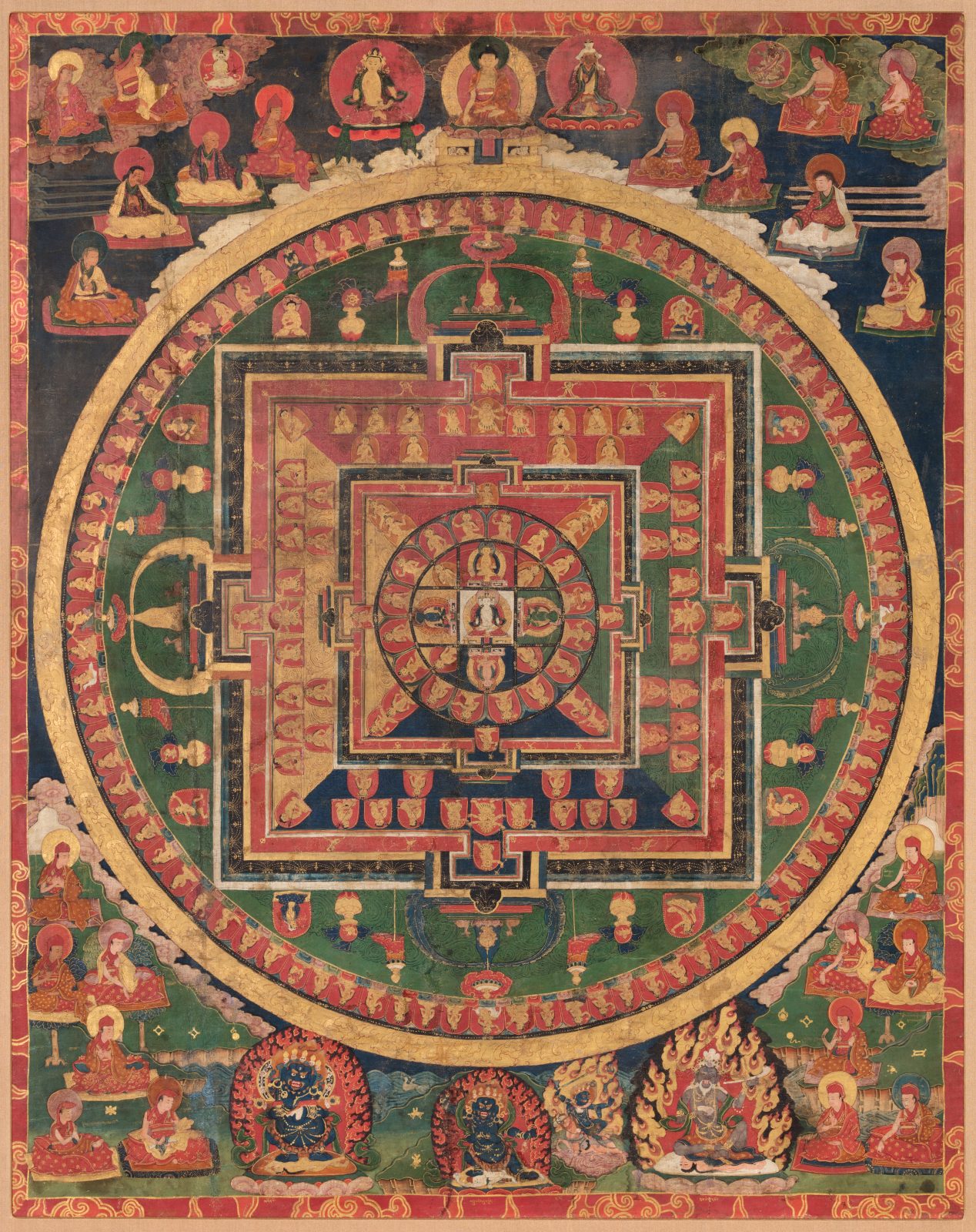
Luc: Yeah. So then I was like: "Wow. I want to make a record about the ritual of drawing mandalas. This is amazing. To devote your life to this? Wow." It blew my mind.
Yeah.
Luc: Can you imagine? You get up one day and this is the life choice you make: "I’m going to devote myself to this."
Man, I can imagine that life choice so much more than I can imagine many other life choices. I’ve got to tell you.
Luc: [Laughs] Yeah, yeah, yeah. So anyway, I got a book about the process of the mandala and everything. And dude, I went: "There’s no way that’s going to work, because if I read books for even 10 years, I’m going to barely scratch the surface of this." So, I was reading on mandalas, and then the Dalai Lama, which is "ocean of wisdom" – The song is about that. "Dalai Lama" means "ocean of wisdom." So then I read the story about how he got discovered as a young boy. You know that story?
I don’t.
Luc: There were pilgrims – the Dalai Lama died, so they had to look for where his soul reincarnated. So they went on a pilgrimage in the mountains.
That’s another journey, right?
Luc: Another journey! And then they stopped someplace for hospitality and food. So they were taken care of, and they stopped at that place. But they were looking at omens, and they knew they would find him at this place, but they had to validate. So they had objects that had belonged to the previous Dalai Lama, and they had random objects as well. They displayed them in the house, and for some reason the young kid chose all the objects that belonged to the previous one, so they said: "You are the one." So they took him with them, and he became what he became. This is a beautiful story. It's amazing.
What a trip.
Luc: It’s a beautiful story! Amazing. So, long story short, the structure slowly came together for me. That’s how the first four songs came to talk about the beauty of the geography where it’s located, the culture, everything.
Have you been?
Luc: I’ve been, but through books.
That’s the point of my question. Yeah, there we go. So you have been, but you haven’t been.
Luc: Exactly. And then you have the middle section of the record, the interlude with the strings. Sonically, it brings the listener new textures in the ears. It breaks with the distortion and the drums and everything And then with "Enemies of Compassion," it kicks back in. It’s about the dramatic fate that struck these people with the invasion of China, the people immolating themselves in public to protest it. "Absconders," again, is about people leaving. So that’s why, if you look at the image in the book, you see masks in the snow. It’s as if, as a person, you take the identity that somebody stuck on you, you take it off, you leave it behind, and you leave. And the last one, "Reduced to Silence," is about the Chinese people always squeezing geographically and slowly choking.
That’s incredible.
Luc: It’s a beautiful story!
It is. I mean, the person I am, and it shows, if you want a view into how I am as a man, the first thing I thought when I heard that story was: "Poor kid." Because it’s a beautiful story of being found, but how does that feel like when a bunch of strangers look at you and say you’re the chosen one? That’s got to be a heavy moment.
Luc: Yeah, you’ve got to believe.
I mean, it might be great.
Luc: But that’s a different perspective of that story. But my angle of telling the story was about the journey, how they found the chosen one.
Okay, so, about how they found him, it made me think, okay, I’ve never been a person who was that interested in improvisation, even though, when I think about it, that’s how I write. I improv stuff, and whatever works works and whatever doesn’t I throw out. I don’t really sit down. I don’t know, there are many different ways of writing.
Luc: Yeah.
But I have become more and more interested in improvisation. And so I’ve had a few conversations, relatively recently, about improvisation. And the reason I say "improvisation" here is because improvisation seems to me like a journey, or could be understood as a free hike through the wilderness until you might find something, you might not find it. And also the people who were looking for the Dalai Lama: you always have to be ready to meet him, but always be open to the idea that you haven’t met him yet.
Luc: You kind of have to keep your radar open.
So you need to have a very open radar and keep it open, which is very difficult to do, right?
Luc: Yeah, yeah.
Because maybe sometimes you're tired. Maybe sometimes you haven’t seen your kids in a couple of years, and maybe you just want the next kid to be it, and maybe that’s it for you, maybe you’re just fed up, maybe 10 years since the last album is too much, maybe just put out an album, you know.
Luc: [Smiles]
And so, how do you feel about it? Does improvisation play any role in how you think about your structures or how you build your songs, or is it just like a math problem that you’re trying to figure out?
Luc: Me, rule number one is that I work towards the music that I want to hear. I picture a type of song, so I’m to take my block and [imitating chipping sounds] carve it out, look for it. And then: "Oh! That’s what I want to hear!" That’s what guides me. Personally, improvisation ever worked well for me, and to be honest with you improvisation never really much turned me on. When I played with Big Steve [Hurdle] in Negativa after Gorguts and everything, he was a big fan of improvisation, and it never really clicked for me. I don’t know. It doesn’t ring any bells for me
The image you used here is finding the shape in the rock, kind of a Michaelagnelo method?
Luc: Yeah, yeah.
You’re a Renaissance guy.
Luc: [Laughs]
Which makes sense because I think the a major aspect of the Renaissance was how to bring together what we think of today as “creativity” with rationality. That it’s not randomly beautiful it’s intentionally beautiful.
Luc: Oh, that’s a good way of putting it, absolutely.
So, that was kind of my sense, I wasn’t really thinking of you as an improivizing person so I guess I wanted to be affirmed in that opinion.
Luc: Yeah. But, again, you do also always have to do some improvisation in the sense of…. I don’t know, it’s hard to explain. For example, I write a new song and it’s a doom song – that didn’t happen by accident, I had in mind the intention of writing a doom song, and then I go about searching for the riff that I really want to hear, and there you have those beautiful little accidents that are a part of it. So that little slice of improvisation can live for me, but I have a clear intention of what I want to do. I’m sitting there thinking: “Where do I want to go, sonically? A blast-beat, very violent with intricate riffing? Is it an old-school tremolo thing, but still intricate?” So, I have a clear intention, and then with the toolbox you have as a composer, that helps you make decisions – keep or leave.
I just think it’s really interesting, because Colored Sands is about wisdom but also about a culture for which wisdom is also spiritual wisdom. So, The Dalai Lama is a wise man but also a holy man. I’m very interested in various forms of spirituality, not because I practice, but I think it’s an interesting intellectual journey. Some forms of spirituality are like improvisation, in that they are based on this lightning bolt of inspiration, they are not about complex structures of knowledge, whether esoteric or not, they’re just: "Me and God, we’re connected." I can talk to him wherever I feel like it. I don’t need something really complex to talk to God, I can just do it. I can go to the cornfield and be alone in the cornfield and that would be my religion.
Luc: Yeah.
But there’s another form of spirituality or religiosity that really does insist on the specificity of the ritual. It says: "Yeah, that’s all good and well, but there are rules to this game."
Luc: Yeah, yeah, yeah.
“You don’t just walk into a cornfield and talk to god. And if you study those rules – read the book for ten, twenty years or for thirty, fourty, fifty years, you might get a hang of the game. And only then can you even attempt a spiritual connection.” And so the reason I posit these is because it feels like Gorguts is made in your image – with the white beard you kind of already look like God [laughs] – and it seems more of the second kind. You can touch beauty, but it’s not just going to come. You know what I’m saying?
Luc: Sure, sure. You got to have your way of getting in the zone, or something like that. But that’s different to every one.
It is, but it’s interesting that an album about spirituality is so intricate and intentional.
Luc: But, for Colored Sands, that story, I just consulted so many books about Tibet – poetry, beautiful texts. But the spiritual angle from them, that’s not what attracted me to that story. It was more about how remote it was. But, again, the door was opened by the ritual of the mandala. It just blew my mind. And also the pilgrims that go to do the mandala. Have you ever seen them?
No.
Luc: They have this apron like a woodworker has, and these sliders on their hands, and every three steps they take they prostrate themselves. Then they get up, they take some more steps, and they prostrate again. They do that for miles.
That’s unreal.

Luc: Until they get to the place where the mandala is going to be conceived. For me all of this was just: “Wow!” And it’s made in the most modest way – and it’s grandiose, as well. So, for me that’s that essence. I wanted to take a mirror, to point it at that and say: “Hey, people, you really have to know about this story,” because it’s so fucking beautiful.
But don’t you think you think it’s beautiful because it’s also a story about absolute devotion?
Luc: Devotion is…. That’s true.
That you really need to get your shit together. You don’t just randomly pop up and do a mandala, you have to really want to do it.
Luc: Yeah. It’s not somebody who took up an ad in the newspaper and said: “Hey, I’m going to take care of yellow today!” [Laughs].
[Laughs] So, on the one hand, Pleiades’ Dust and Colored Sands both come together, and I’m treating them as a unit for a second, they come way later, and they sound way different. So whatever chakra was opened with Obscura and then From Wisdom to Hate, it really gets fully spread out in those two albums.
Luc: [Laughs]
I don’t know how the new album will sound, just those. And so, given how important it is for you to really think things out and have a clear, unified vision of what you want your art to look like, and yet at the same time it just so happens that two very smart, very able people, in the form of Kevin and Colin, joined the band.
Luc: Yeah.
So what does that do? It’s not just these two options, but is it: "Okay, great, now I have even more tools to help build my vision" or is it: "These are the kinds of people I want in the room thinking with me about what kind of music we make"? So what was their impact on the very clear shift in sound? Was that shift because you wanted things to look and feel differently at that stage of the band’s life, now that it’s a thing again? Or did they somehow influence it as well?
Luc: You’ll get the answer by me explaining how the creative process works, you’ll get the answer. The way Colored Sands, Pleiades, and the new record were made is that I write the music, and they have the chance to write their songs as well. But let’s say, me, how it works is I’ll write a song, I even program all the drums, not to be, like, a despot: "Oh, you’re going to do this, you’re going to do that."
That sounds like fun.
Luc: [Laughs]. What’s cool with technology is that, instead of standing in the room, since we live far apart, we’re not in the same room together, with technology I can express clearly what the idea is that I have in mind. Is it going to be a blast beat? Is it going to be a very slow, heavy drum part here? So I can explain and demonstrate clearly what my intention is with the song. So I write the whole song, I program the drums, I do all the tabs, I send that to Kev, I send that to Colin, and I send the song, let’s say, to Mike, our new drummer. So everyone learns the song, but puts their grain of salt into it. Let’s say I want a blast beat here. Mike’s going to play a blast beat, but if he wants to add fills and spice it up and this and that, that’s his own liberty. He does anything he wants. Because if I write double bass, I’ll write it kind of plain, but sometimes if I want a very specific fill I can program it to express it. But at the end of the day, it’s him singing on his instrument.
And then with Kevin and Colin, what they do is they write their parts. Let’s say if you listen to Pleiades, I don’t think we ever play the same riff together. I mean, let’s say I play a guitar riff. It never happens that Kevin plays the same riff as me. Never. It’s always like a three-voice counterpoint. I play my part, because I play seven-string as well, Kev plays six-string and Colin plays six-string, but he’s got a different tuning than we do. So Colin goes absolutely by ear and he just writes whatever he feels like.
And then when we get together in the room, and with Pleiades that’s what happened, we fine-tune here and there. But, dude, when we did Colored Sands, that’s how we wrote. I sent the song with tabs, and I didn’t even program drums back then. What I would do, I would go to Saratoga and jam with [John] Longstreth, one-on-one, and explain to him, oh, that’s what I hear here and there, and then he would put his touch on it. And for the Colored Sands thing, Kev wrote all his riffs, Colin wrote all his parts, and we barely changed anything. We just layered that together, and that’s what created that sound.
Yeah, I’m just thinking, as a listener who is a big fan of every single person just named in this conversation, and each of those people is a very big-brained musician with a lot of knowledge and a lot of ambition and are very unclichéd, quote unquote, metal musicians. I think Kevin’s on the fringes of not even being metal at points.
Luc: Yeah.
So I wonder, obviously they’re a great fit, because the band is the band, et cetera, but I just wondered if it was a fortuitous coming together of the right people at the right time, wanting to do the right thing?
Luc: I was so impressed by their talent, because I didn’t know much of their band. I remember it was Big Steve Hurdle, when I told him that— he was the one who told me, he said: "Dude, you should do another Gorguts record." And I’m like: "Man, I’m done with this. I’m done with that now, I’m working, and I’m very happy." He said: "Yeah, but dude, I go a lot on the internet, and you should read the forums and this and that. People would really love this." I’m like: "Man, I don’t know. We did that Negativa project and, I don’t know, man, my plate is full." And then he goes: "If you ever want to make another record, I would love to play in the band." So I said: "Let me think about it.” So I thought about it, and then I said, yeah, maybe it would be cool. But for some reason I had seen Colin play the Warr guitar on some video and I said: "Wow, this is great." So he was my first pick. And then John Longstreth for drums – John would send me an email or two per year, saying: "Hey dude, if you want to jam, that would be fun," this and that. And we never met each other.
Yeah.
Luc: Just for: "Hey, what’s up?" That’s it. And I was a big fan of Knives of Ice from Dim Mak. You know this record? It’s Sean who was in Ripping Corpse.
That nineties series I told you about, I interviewed Sean there about that Ripping Corpse album.
Luc: Dude, I heard that Dim Mak record, Knives of Ice, with Longstreth’s drumming on it, I was like: “Holy fucking shit, this is awesome.”
He’s amazing.
Luc: So I said: “I want this guy.” And then when I told Big Steve, I said: "You know, man, don’t take it badly, but we already do Negativa together. I think I want to have somebody else. We did Obscura together. We played a lot together, which is great, but I want to make something different." He said: "Okay, no hard feelings, that’s good." But he said: "Dude, if you’re going to get a new guitar player, you’ve got to check out this guy." So we went to his house after the jam and he showed me a Dysrhythmia video.
And it was “Bypassed the Solenoid” by Dysrhythmia. And he said: "What’s cool is that Colin plays with him." I said: "Get out!" I didn’t know about them. So man, I watched this video so many times, and the way Kev was playing, I’m like: “Holy shit, that’s what I want.” So what I did, I wrote three songs. I wrote "Enemies of Compassion," "An Ocean of Wisdom," and "Ember’s Voice." And I had the demo only with the click, because I didn’t program drums back then. I’d just started getting into computers for libraries. But I already used computers, but it was only to do music sheets and music scores when I was at the conservatory.
So anyway, what I did was that I went to a friend’s, and he would record me and make a click track for me, and I would record my tracks, and then I would use those. So I wrote to the guys: “Hey, Luc from Gorguts here.” And I wrote them on MySpace. You remember MySpace?
Yeah, of course.
Luc: So it was on MySpace. I said: “I really want to make a record, and I love how you guys play. So let me know if you want to join. You can check out these songs, do whatever you want with these songs, and we’ll get together and see if we get along and how it sounds, and we’ll take it from there.” So they sent me the tracks and everything, and I started jamming with John, and dude, we got together and we did a demo the first weekend. We recorded, like, a three-song demo. We recorded these songs. And man, we sounded like a fucking million bucks right away. So it was like: "Wow, that’s it?" It was really simple.
You found the Dalai Lama. They recognized the objects.
Luc: Yeah! But it was really natural. But I want this to be fun. I want this to be, yeah, no complicated stuff, you know?
Is it still fun?
Luc: Oh yeah, that’s the main rule for me. Colored Sands came out 13 years after From Wisdom to Hate, and to make a long story short, when the Olympic [Recordings] was taken by Century Media, logically I had to deal with Century Media. But when I started to do negotiations, things just got fucked up. I’m no fucking high-maintenance guy, but we just didn’t see eye to eye. And they held me, shelved me, for over two years.
Oh, wow.
Luc: So I couldn’t do anything. So I waited two more years just for that shit-show to finish. And then we recorded the album, and the rest is history. But I waited. I believed so strongly in those compositions. And I don’t do this for fame or whatever. I do it because I really love it. My thing is, if I don’t play with the band, I’m really happy doing woodwork and other things. My life doesn’t resonate only with that, it’s not like the band is the only thing I have in life. I do all the things that I’m passionate about, and I’m lucky for that. These are the choices I made, because I experienced very low, low, low periods with the band. After Erosion, before we did Obscura, nobody wanted to give us a record deal. Nobody. But in the meantime I was studying viola and going to the conservatory. So I was really happy with the other things too.
That’s a recurring theme of…. before I get to my last question. I would say that’s one of the main takeaways of these 60 interviews, and the couple dozen I’ve done for the 90s ones, and just in general. Like I said in the beginning, that it really is no small feat to keep making music that’s relevant throughout three different decades, and I find most of the time, the very rare people that pull that off, you say that they don’t think of the band as their job. And I think in a way that’s also a very strange kind of, yes, improvisation. It is a kind of improvisation, because you do it when it feels right.
Luc: Yeah.
Even if it’s very intentional and very rational, all that stuff, if it doesn’t feel right, you just don’t do it. And when it feels right, you do it, and that’s kind of the secret sauce of the whole thing.
Luc: Yeah. I do it when I feel I have something to say. Because if I feel like I need to— let’s say I write a new composition and I’m like: "Whoa, this is cool, I can’t wait to share this with the boys." I need to have this feeling. If I don’t have it…. But the thing is, I never saw the band as my “job,” in a pejorative way of saying: "Ah, I’ve got to go to my job." It became my main occupation, but I want this to be very pleasant and I don’t want to create trouble in my life. Otherwise…. Man, I don’t know how old you are, but I’ll be 55. Sixty years old is around the corner. So, it needs to be fun.
For sure, 100%. I’m 45, but 100%,
Luc: You’re so young! [Laughs]
Tell that to my knees, Luc. So, final question. The final question is just like the first question. It’s a set question, which is— actually, it’s very good timing for this, because this is the album that you just recorded and is the first full album since the one we’re talking about right now. So it might have been in the back of your mind when you were writing this music, or just recently in general. The question is: is there anything, when you look back at Colored Sands, and you say: “Yes, I’m very happy about that.” It could be one specific song, the fact that you made it, the production, the artwork, whatever. Something that, when you look back at it, leaves a positive residue in your soul having to do with that album.
Luc: The composition, for sure. But I’m very happy and proud that this subject appeared on my path. I would never have expected to write an extreme death metal record about that. And it kind of proved to me that it all depends on the angle you bring to the table. You can make death metal and as extreme as it is and sing about all these stories. It doesn’t have to bleed and have broken skulls every two seconds. They’re amazing stories, they’re philosophical, or they’re just— look at the song “Colored Sands,” it just talks about— it’s majestic. It’s beautiful. But it’s still heavy. It doesn’t compromise the heaviness of the music.
Yeah.
Luc: So, the fact that you can sing about beautiful mountains, not in a black metal way, not that I’m saying anything…
Yeah, no, I understand what you mean.
Luc: Yeah. What Tibet is, how they found the Dalai Lama, you can write a fucking heavy song about this. So it kind of proved to myself also that I can write heavy music and sing about everything that touches me as a person, that gives me that moment where I say: “I’ve got to write something about this. It’s beautiful,” but I’m going to bring it with the aesthetic where I’m like a little goldfish in a pond, you know, which is writing heavy, intricate death metal.
So basically, whatever inspires you intellectually can meet whatever inspires you musically and live in the same place. Yeah. Like with Pleiades’ Dust and Colored Sands, dude, I made a 30-minute song about the beauty of books and knowledge. I sing about the library, and it’s intricate, and it’s dark, and it’s heavy as fuck and it works.
It’s a sick album about books. What’s better than that?
Luc: Exactly. It’s an evil ode to books.
I mean, I don’t know if there ever was a better way to end the conversation. I cannot thank you enough, Luc. I’m sorry if I took up more of your time than you planned, and I know you have signs to make and cars to fix and whatever.
Luc: I loved this conversation. No problem. I had a very, very good time and a good conversation.

